
When “Clean” Doesn’t Stay Clean
Most people have experienced it.
You clean a sink.
A few days later, the slick feeling is back.
You wash a pet bowl, wipe a trash can, scrub a damp corner—yet something about the surface still feels off.
This isn’t poor cleaning. It isn’t laziness.
It’s chemistry and biology doing what they’ve done for billions of years.
To understand why some household messes return, we need to zoom in—far past what the eye can see—and talk about biofilms, one of nature’s most effective survival strategies.
What Is a Biofilm, Really?
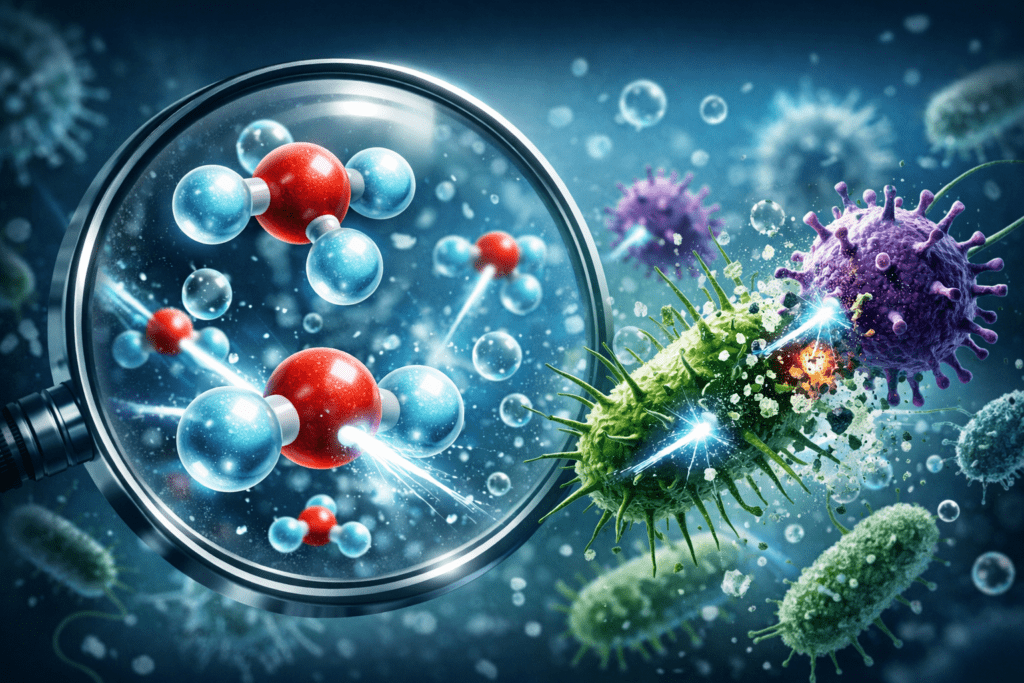
A biofilm isn’t a single organism.
It’s a community.
Microscopic organisms naturally prefer to live together rather than alone. When conditions are even slightly favorable—moisture, warmth, and a food source—they begin producing a sticky matrix made of sugars and proteins. This matrix anchors them to surfaces and to each other.
Think of it less like dust and more like a microscopic neighborhood with shared walls.
This structure:
- Holds moisture
- Traps organic material
- Slows evaporation
- Cushions the organisms from their environment
Once formed, the biofilm acts like a thin, invisible shield.
Why Biofilms Form So Easily in Everyday Spaces
Biofilms don’t require extreme environments.
They form anywhere moisture lingers long enough.
Common household locations include:
- Sink drains and overflows
- Trash cans and recycling bins
- Pet bowls and litter areas
- Sponges, cloths, and mop heads
- Bathroom grout and shower edges
- Refrigerator drip trays
These locations share three things:
- Water
- Organic matter
- Time
No dramatic contamination is required. Ordinary daily life supplies everything biofilms need.
The Sticky Truth: Why Wiping Alone Often Isn’t Enough
Many cleaning methods focus on surface removal—wiping away what’s visible.
Biofilms complicate that.
The outer layer of a biofilm can appear clean while the internal structure remains intact. The sticky matrix:
- Holds onto surfaces tightly
- Slows down chemical reactions
- Reduces how deeply cleaning agents penetrate
This is why a surface may look clean yet regain odor, slickness, or residue quickly. The underlying structure was never fully disrupted.
Also Read 👉🏻Chlorine Dioxide Tablets for Kitchen & Bathroom Cleaning
A Simple Analogy: Raincoats vs. Rain
Imagine standing in heavy rain.
Now imagine wearing a raincoat.
The rain still falls—but its impact changes.
Biofilms function similarly. They don’t stop interaction entirely, but they slow it, redirect it, and buffer it.
This buffering effect is what makes recurring messes so frustrating.
Where Chemistry Enters the Conversation
At this point, chemistry matters more than scrubbing strength.
Different cleaning technologies interact with biofilms in different ways:
- Some react mostly at the surface
- Some leave residues behind
- Some struggle to move through moisture layers
Understanding how molecules move, react, and disperse is more important than how harsh a cleaner feels.
This is where chlorine dioxide chemistry becomes interesting—not because it is “strong,” but because it behaves differently at the molecular level. That difference will be explored step-by-step in the articles ahead.
Also Read 👉🏻Ways to Prevent Persistent Odors From Returning for Good In 2026
Why This Knowledge Matters for Everyday Users
This isn’t about fear or overthinking cleaning.
It’s about expectations.
When people understand that recurring messes are often structural—not personal failure—they make better choices:
- More informed cleaning routines
- Better rotation of tools and materials
- Smarter use of chemistry instead of brute force
Knowledge removes frustration. Science replaces guesswork.
What Comes Next in This Series
In the next article, we’ll explore oxidation—a natural chemical process that explains why some odors disappear while others linger.
No scare language.
No restricted claims.
Just clear, grounded science that explains what’s happening at the molecular level.
(FAQs)
1. What is a biofilm in simple terms?
A biofilm is a sticky layer created by microscopic organisms that helps them stay attached to surfaces and retain moisture.
2. Are biofilms visible to the naked eye?
Most biofilms are invisible, though they may cause slickness, residue, or recurring odors.
3. Why do biofilms form in wet areas?
Moisture allows the protective matrix to remain stable and prevents drying that would disrupt it.
4. Can regular wiping remove biofilms?
Wiping may remove surface material but often leaves the underlying structure intact.
5. Why do odors come back after cleaning?
Odors often originate from organic material trapped within thin moisture layers.
6. Are biofilms harmful?
Biofilms are a natural phenomenon; their significance depends on location and context.
7. Do all surfaces develop biofilms?
Any surface exposed to moisture and organic matter can develop them over time.
8. Why do drains feel slippery even after cleaning?
That slick feeling often comes from remaining biofilm layers holding moisture.
9. Is stronger cleaning always better?
Not necessarily. Chemistry and molecular behavior matter more than force.
10. What’s the benefit of understanding biofilms?
It helps set realistic expectations and leads to smarter, more effective cleaning choices.