

ClO2 for Agricultural Water System Hygiene
Agricultural water systems are vulnerable to biofilm buildup, algae growth, and organic contamination. Chlorine dioxide supports irrigation line maintenance, rainwater storage sanitation, and tank hygiene for small farms and homesteads seeking cleaner, more manageable water systems.
A Unique Assortment of Potential Setbacks for Small Growers
Agricultural water systems — including irrigation lines, storage tanks, rainwater catchment systems, and hydroponic reservoirs — are highly susceptible to biofilm formation, organic buildup, and algae growth.
Over time, these accumulations can:
- Restrict flow in drip lines
- Reduce emitter efficiency
- Create slime layers inside plumbing
- Produce odors in storage tanks
- Harbor microbial colonies within biofilms
Chlorine dioxide (ClO2) is widely used as a system sanitation tool in agricultural water infrastructure because of its ability to penetrate and disrupt biofilms while functioning effectively at low parts-per-million (ppm) concentrations.
This page outlines practical infusion ranges and system maintenance approaches for small farms and homesteads.
Understanding Biofilm in Agricultural Water Systems
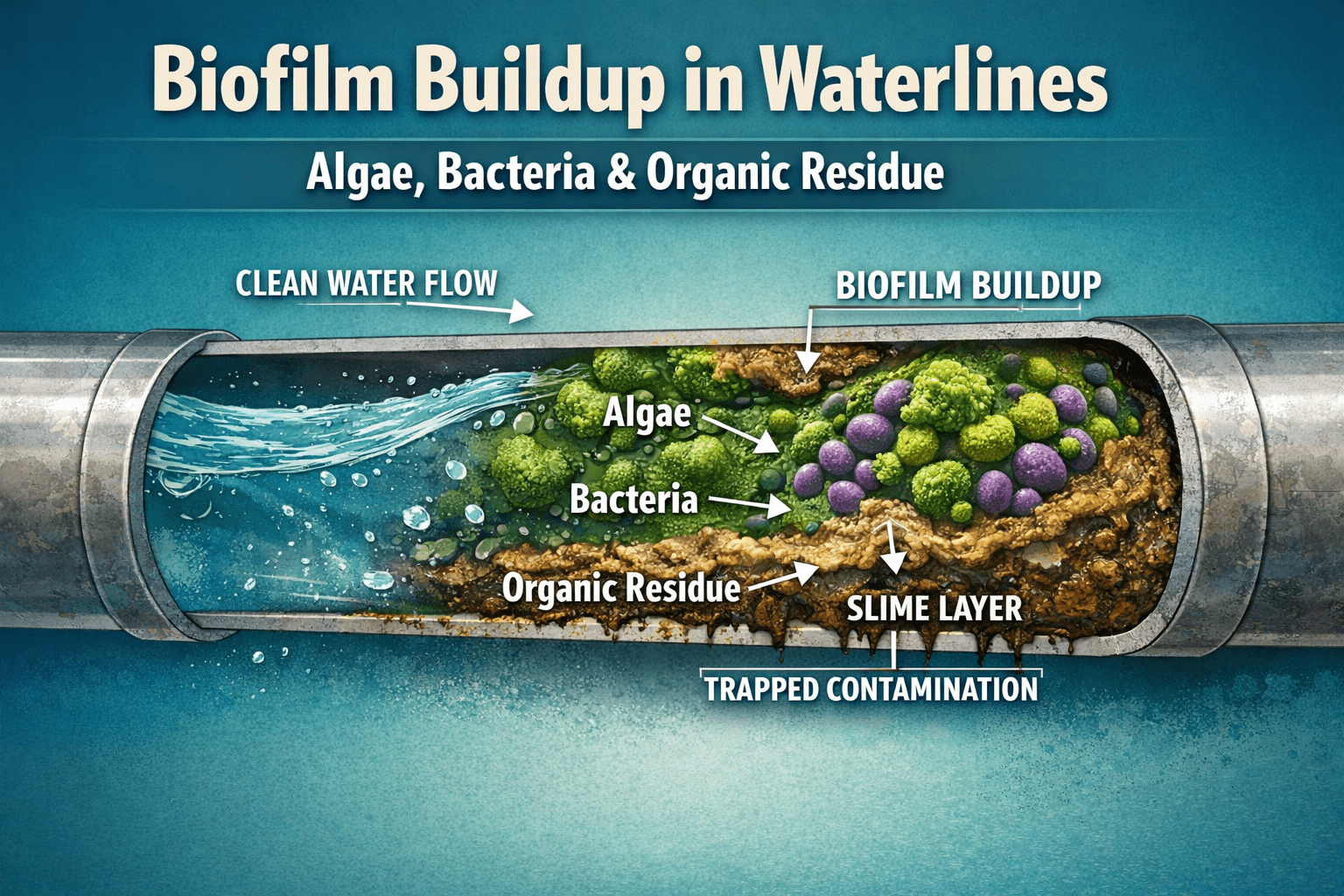
Biofilm is a structured layer of microorganisms embedded in a protective matrix that adheres to pipe walls, tank surfaces, emitters, and fittings.
Common locations include:
- Drip irrigation lines
- Sprayer hoses
- Rain barrels
- IBC totes
- Hydroponic plumbing
- Storage tanks
Once established, biofilm reduces flow efficiency and protects embedded microorganisms from routine flushing.
Chlorine dioxide is particularly effective in water systems because it remains dissolved as a gas, allowing it to diffuse into biofilm layers rather than reacting immediately at the surface like traditional oxidizers.
General ClO2 Infusion Ranges for Agricultural Water Systems
Low-Level Maintenance ClO2 Infusion - 0.5 - 2 ppm
Used for:
- Continuous or periodic irrigation line maintenance
- Prevention-focused tank sanitation
- Routine biofilm suppression
- Drip emitter cleanliness support
This range is typically used during normal operation where ongoing system hygiene is desired without aggressive shock treatment.
Recovery - Biofilm Reduction ClO2 Infusion - 2 - 5 ppm
Used for:
- Systems with visible slime buildup
- Reduced emitter flow
- Seasonal startup flushing
- Rainwater tank cleaning cycles
This range is often circulated through lines and allowed contact time before flushing.
Shock - Total System Reset ClO2 Infusion - 5 - 10 ppm
Used for:
- Severe biofilm accumulation
- Algae-dense storage tanks
- Long-idle irrigation systems
- Pre-season system sanitation
This level is generally applied with controlled contact time, followed by flushing prior to return to routine operation.
Application Methods in Farm Water Systems
ClO2 can be introduced into agricultural systems through:
- Batch tank dosing
- Injection pumps
- Pre-dissolved concentrate infusion
- Recirculation flushing
- Line soaking procedures
For small farms and homesteads, batch dosing into storage tanks or pre-dissolved concentrate injection into irrigation feed lines is most common.
Contact Time Considerations
Contact time depends on:
- Organic load
- Water temperature
- Severity of biofilm
- System design
General guidance:
- Maintenance dosing: Continuous or periodic
- Corrective dosing: 30–120 minutes circulation
- Shock dosing: 1–4 hours, followed by flushing
Always verify ppm with appropriate test strips before and during treatment.
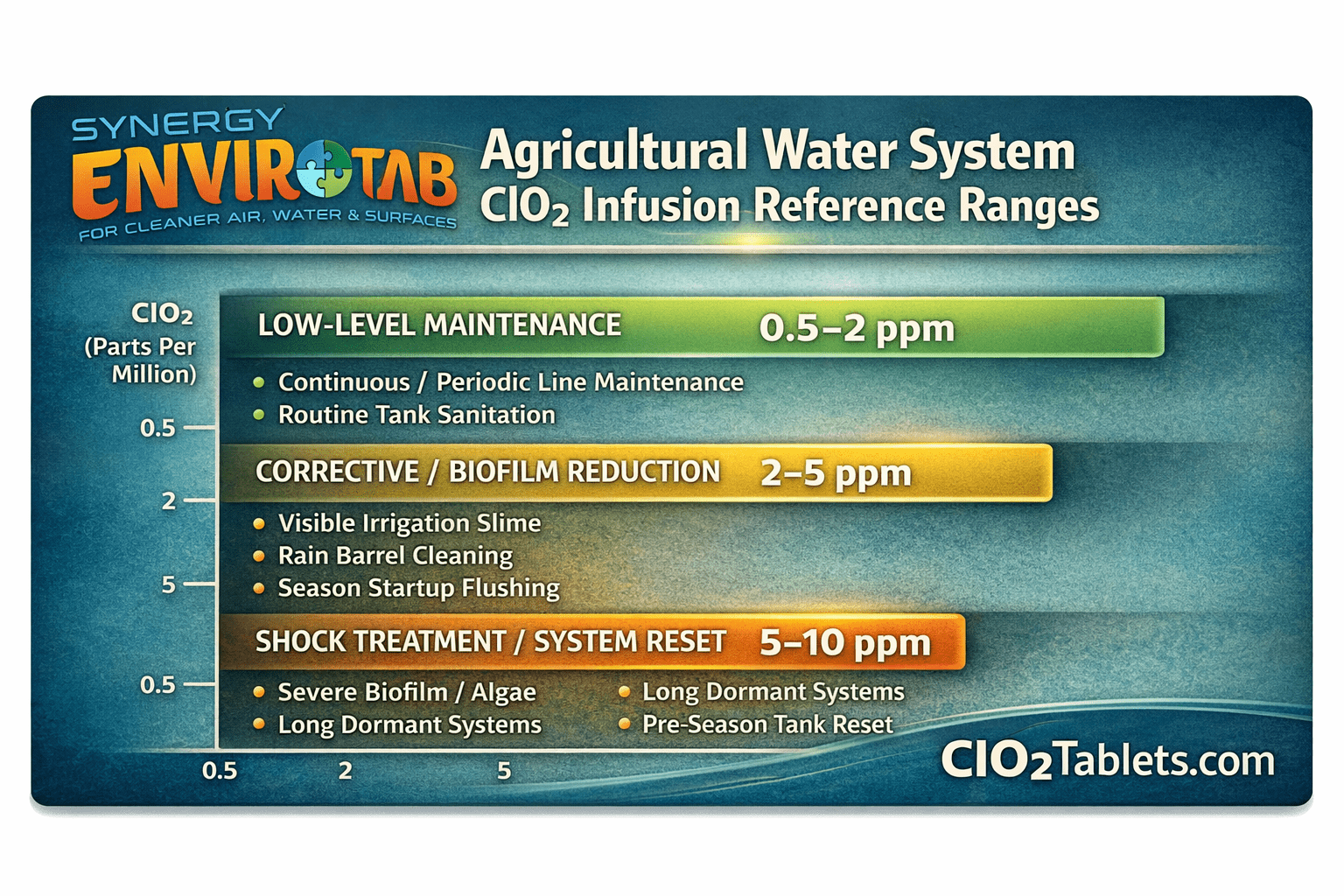
Click the chart to enlarge and print.
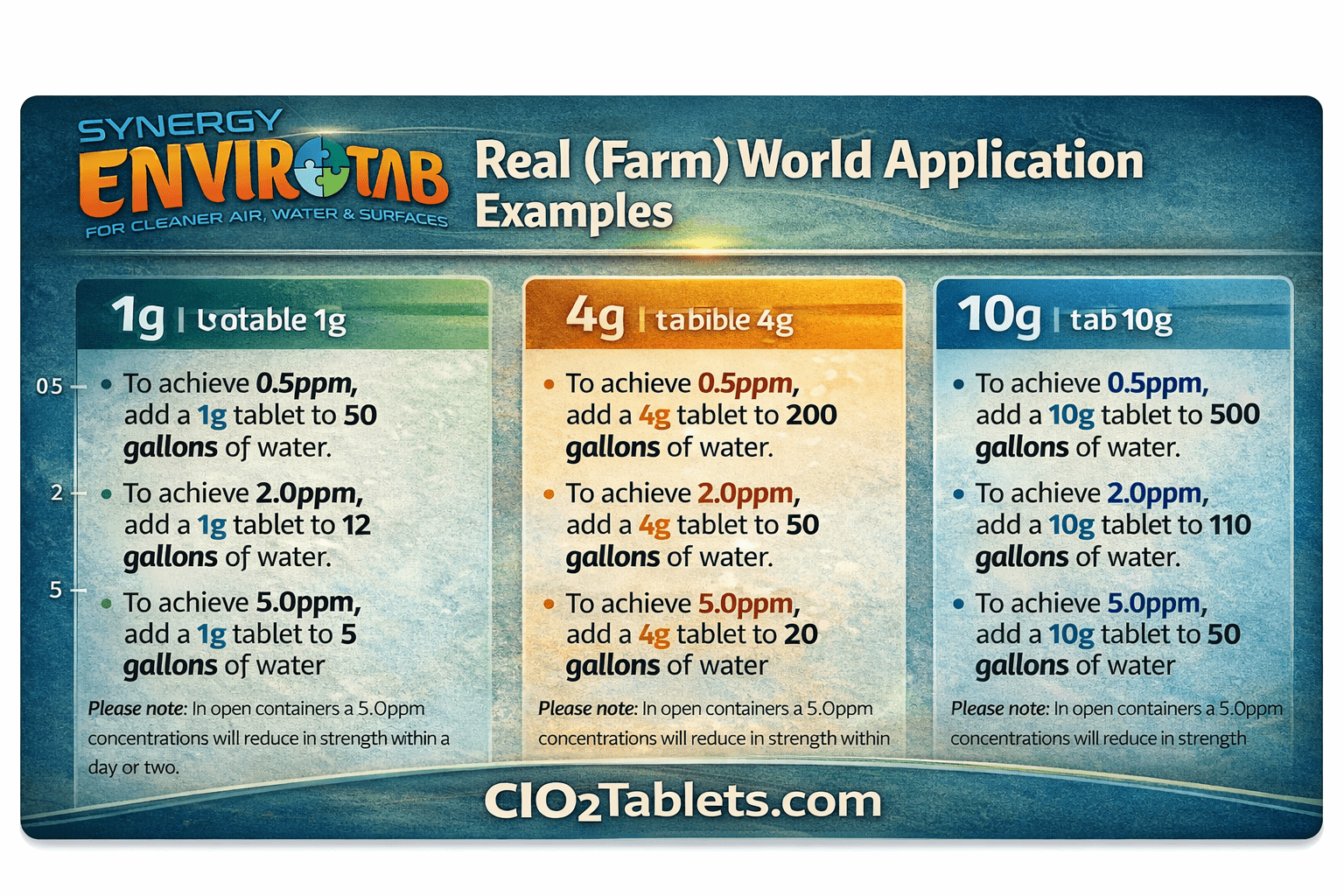
Click the chart to enlarge and print.
Seasonal Sanitation Protocols for Small Farms
Many homesteads benefit from:
- Early spring system flush
- Mid-season maintenance dosing
- Post-harvest irrigation cleanup
- Winter storage sanitation
This proactive approach reduces buildup and improves system longevity.
Why ClO2 Works in Irrigation Infrastructure
Compared to traditional oxidizers, chlorine dioxide:
- Penetrates biofilm more effectively
- Remains active across broader pH ranges
- Produces fewer chlorinated byproducts
- Functions effectively at low ppm levels
This makes it suitable for drip systems, enclosed plumbing, and storage environments where heavy chemical loading is impractical.
Our Most Frequently Asked Questions on ClO2 & Water Delivery & Irrigation Systems
What ppm is typically used for irrigation line maintenance?
Low-level maintenance commonly ranges between 0.5–2 ppm, depending on system conditions and organic load. This routine requires no flushing post-treatment.
Can chlorine dioxide help reduce biofilm in drip & poultry water delivery systems?
ClO2 is widely used for biofilm management in enclosed plumbing and irrigation infrastructure due to its ability to diffuse into biofilm layers.
Should systems be flushed after higher ppm treatment?
Corrective or shock-level treatments are typically followed by flushing prior to returning systems to routine operation.

Our Social Media Links:

P.O. Box 34 Winterport, Maine 04496
If you need more information, or are a commercial buyer, please visit this parent site.