Tag: eliminate odors in ductwork

  • How Chlorine Dioxide Improves HVAC Air Quality and Indoor Environments

    How Chlorine Dioxide Improves HVAC Air Quality and Indoor Environments

    Indoor Air Quality Starts Inside Your HVAC System

    Most people focus on surfaces when they think about cleanliness.

    But the real story?
    👉 Your air system is what defines your environment.

    Every time your HVAC system runs, it moves air through:

    • Ductwork
    • Coils
    • Filters
    • Vents

    If that system contains odor or contamination,
    👉 it distributes it—room by room, breath by breath.


    The Overlooked Source of Poor IAQ

    Indoor air quality (IAQ) issues often don’t come from what you can see.

    They come from what’s circulating.

    Inside HVAC systems, you’ll commonly find:

    • Dust and organic buildup
    • Moisture-prone areas
    • Residual odor compounds
    • Airborne particles that re-circulate continuously

    This creates a cycle:

    1. Contaminants build up inside the system
    2. Air moves through it
    3. Odors and particles spread
    4. The problem repeats

    Why Traditional Cleaning Isn’t Enough

    Fighting Allergens

    Standard HVAC maintenance is important—but incomplete.

    What it typically does:

    ✔ Removes visible debris
    ✔ Improves mechanical performance

    What it often misses:

    ❌ Embedded odor molecules
    ❌ Airborne contamination
    ❌ System-wide environmental issues

    Because IAQ problems aren’t just mechanical—
    👉 they’re environmental and molecular

    Also Read What Is Oxidation, and Why Does It Change Smells and Residue?


    How Chlorine Dioxide Changes the Approach

    Chlorine dioxide (ClO₂) isn’t a surface cleaner.

    It’s an environmental treatment technology.

    Here’s what makes it different:

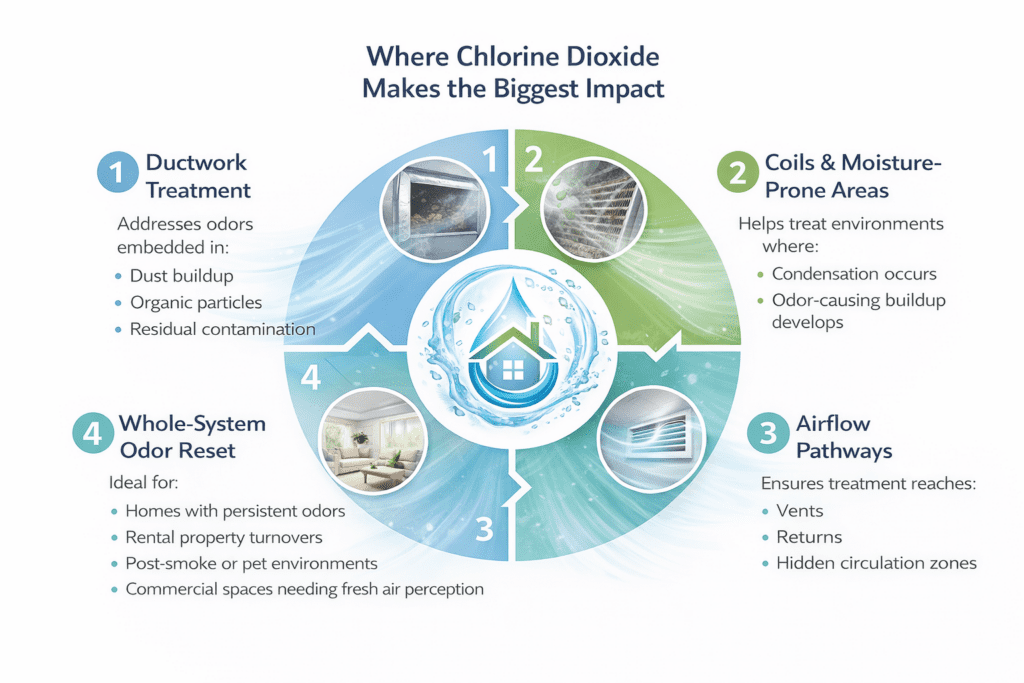
    ✔ Moves Through the Entire HVAC System

    As a gas, it follows airflow pathways—reaching:

    • Ductwork
    • Coils
    • Hidden zones

    ✔ Targets Odor at the Source

    Instead of masking smells, it:

    • Interacts with odor-causing molecules
    • Breaks them down chemically
    • Eliminates the source of the problem

    ✔ Treats the Air, Not Just the Equipment

    It works within:

    • The airspace
    • The system
    • The environment as a whole


    Health, Comfort, and the Air You Breathe

    Let’s talk real-world impact.

    Poor IAQ isn’t just unpleasant—it affects:

    • Comfort
    • Perception of cleanliness
    • Breathing experience
    • Overall indoor environment quality

    When air carries odor or contamination:
    👉 people notice immediately—even if they can’t explain why

    Cleaner air means:
    ✔ More comfortable spaces
    ✔ Better perceived cleanliness
    ✔ Improved indoor experience


    Why IAQ Matters More Than Ever

    Modern buildings are:

    • More sealed
    • More energy-efficient
    • Less naturally ventilated

    That means:
    👉 Air stays inside longer—and so do contaminants

    At the same time:

    • Occupants are more aware of air quality
    • Property standards are rising
    • First impressions are instant

    A Smarter Approach to Indoor Air Quality
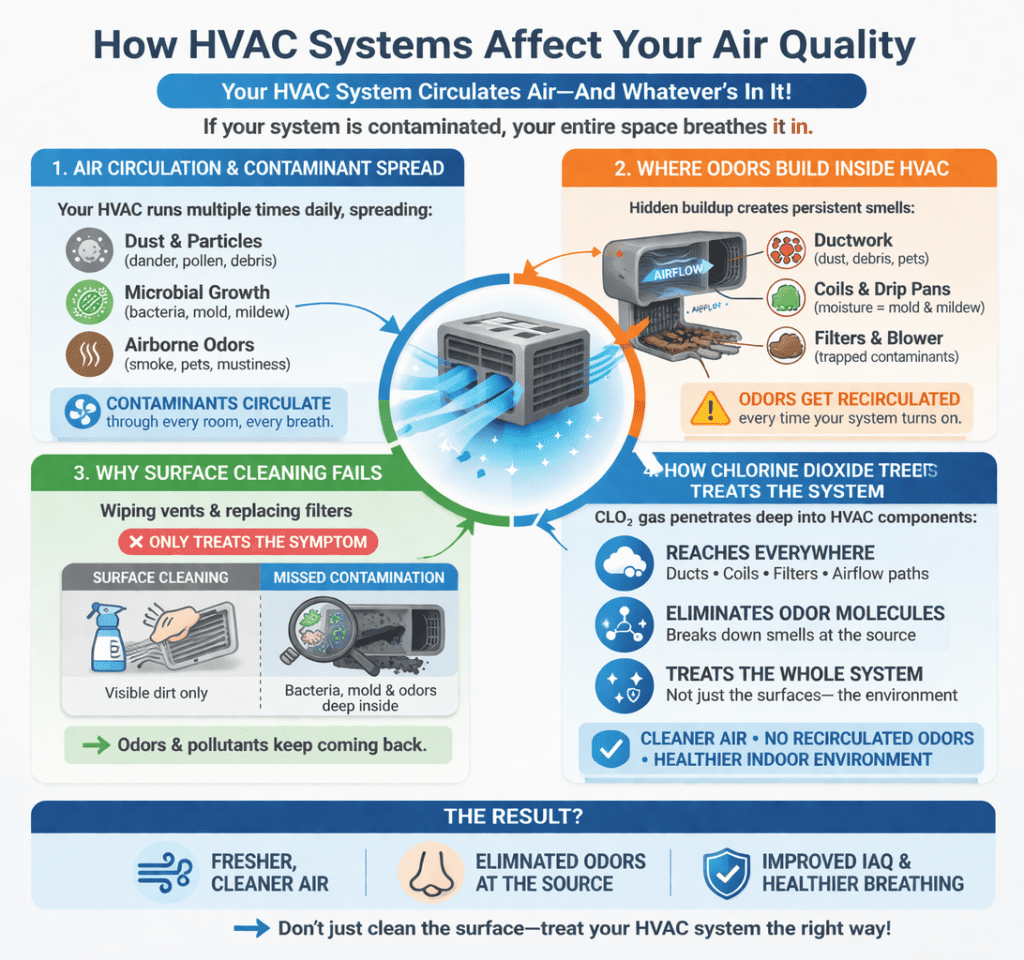
    infograph of how HVAC systems impact IAQ

    Instead of relying only on:

    • Surface cleaning
    • Filters
    • Fragrance-based solutions

    The shift is toward:
    👉 system-level environmental treatment

    Because if the system is clean,
    the air becomes clean.


    Use-Case Scenario

    A homeowner notices:

    • A musty smell every time the AC turns on
    • Air feels “stale” despite cleaning

    The issue isn’t the room—it’s the system.

    After a chlorine dioxide treatment:

    • Odor source is neutralized
    • Air feels clean and neutral
    • The HVAC system stops reintroducing the problem

    Safe and Controlled Use

    Chlorine dioxide is highly effective—but must be used properly.

    Key considerations:

    • Follow product instructions carefully
    • Use correct dosage for space/system size
    • Ensure proper ventilation guidance is followed

    👉 Results come from controlled, intentional use—not overuse

    Also Read Clean Air Cure™ 90 – HVAC Air Distribution Sanitizing System (Up to 90 Days)


    Final Thoughts: Fix the System, Fix the Air

    If your indoor environment doesn’t feel clean,
    the issue may not be what you’re cleaning…

    👉 It’s what you’re breathing.

    Chlorine dioxide offers a way to:

    • Treat the HVAC system
    • Eliminate odor at the source
    • Support a cleaner indoor air environment

    Call to Action

    If you’re dealing with recurring odors or inconsistent indoor air quality, it may be time to move beyond surface-level solutions.

    Discover how chlorine dioxide tablets can help restore your air system and improve the environment you live and work in.

     (FAQs)

    1. How does chlorine dioxide improve indoor air quality?

    It works by breaking down odor-causing molecules within the air system, helping create a cleaner and more neutral indoor environment.


    2. Can chlorine dioxide be used in HVAC systems?

    Yes, it can be used as part of a controlled treatment process to address odors and environmental buildup within HVAC systems.


    3. Why does my HVAC system make my home smell?

    Odors often originate from buildup inside ductwork, coils, or airflow pathways and are distributed throughout the home when the system runs.


    4. Does chlorine dioxide replace HVAC cleaning?

    No, it complements traditional maintenance by addressing odor and environmental factors that cleaning alone may not eliminate.


    5. Can chlorine dioxide reach inside air ducts?

    Yes, as a gas, it travels through the system and reaches areas that are difficult to access with physical cleaning.


    6. Will this help with musty or stale air?

    Yes, it is commonly used to neutralize musty odors and improve the overall freshness of indoor air.


    7. Is chlorine dioxide safe for indoor use?

    When used according to product instructions and guidelines, it is designed for controlled environmental treatment.


    8. How long does it take to improve air quality?

    Results vary depending on the severity of the issue, but improvements are often noticeable within hours to days.


    9. Can it help with pet or smoke odors in HVAC systems?

    Yes, it can address odors from pets, smoke, and other organic sources embedded within the system.


    10. Why do indoor air problems keep coming back?

    Because the source of the issue often remains inside the HVAC system, continuing to circulate through the air.
  • ClO2 Tablets for HVAC Cleaning & Deodorizing

    ClO2 Tablets for HVAC Cleaning & Deodorizing

    Why Your HVAC System May Be the Source of Poor Air Quality

    Most people think of their HVAC system as a solution for comfort.

    But here’s the reality:
    👉 If it’s not properly maintained, your HVAC system can become a distribution system for odors and contaminants.

    Every time air cycles through:

    • Ductwork
    • Coils
    • Filters
    • Blower components

    …it can carry:

    • Musty smells
    • Pet-related odors
    • Smoke residue
    • Organic buildup

    And once those odors are embedded?
    They don’t just disappear—they circulate.


    The Hidden Problem Inside HVAC Systems

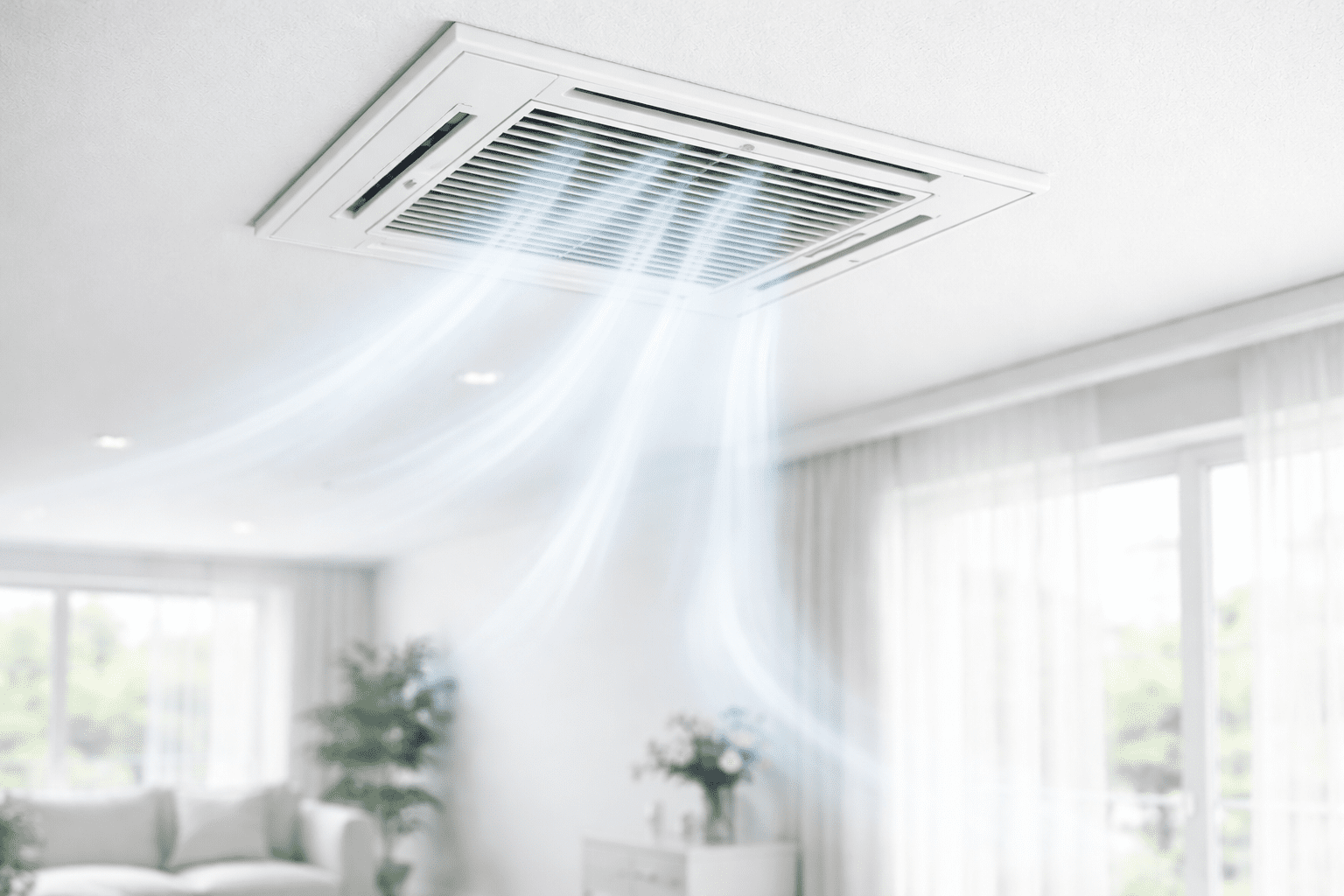
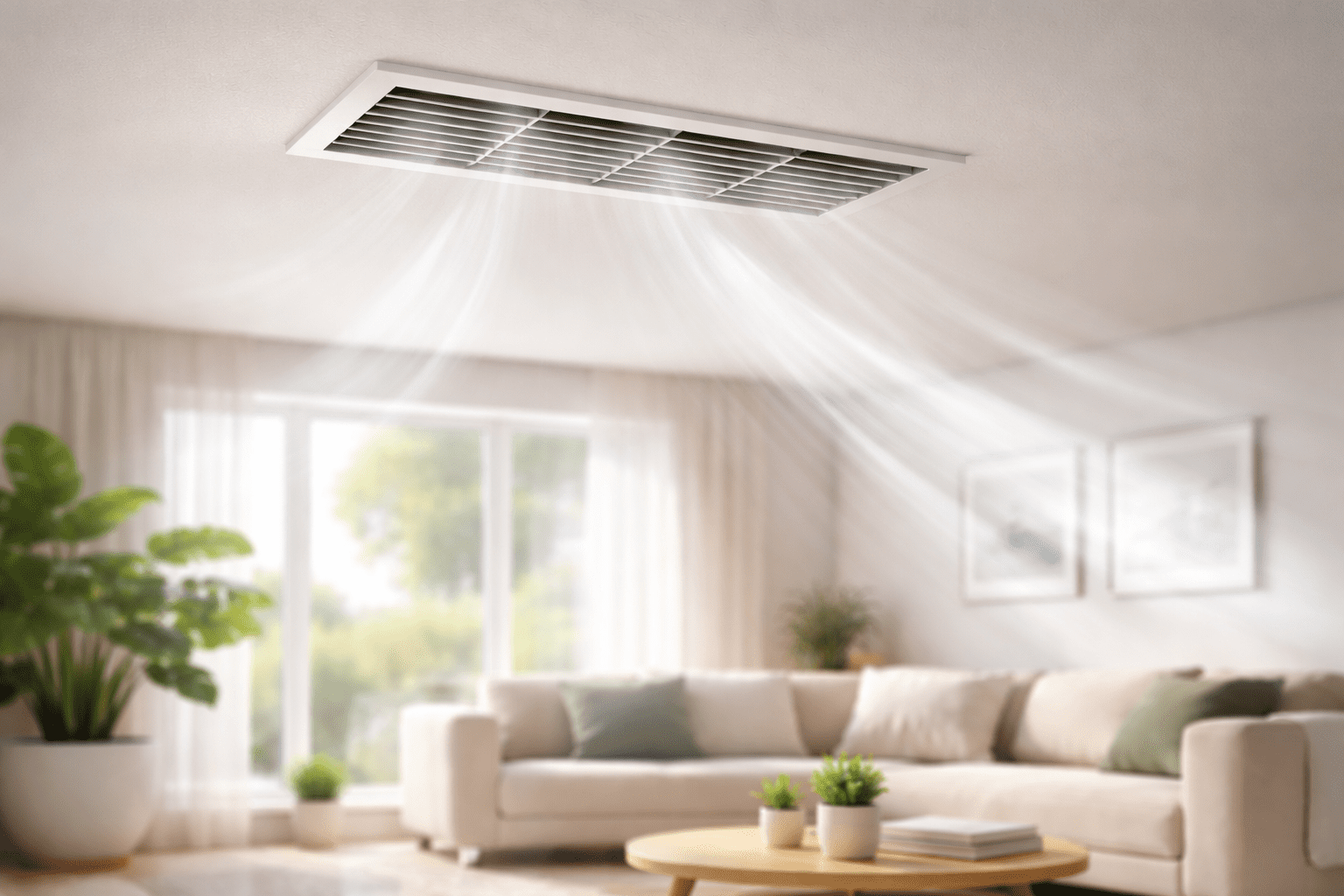
    Modern HVAC vent releasing clean air into a bright home interior, representing improved indoor air quality

    Unlike surfaces you can wipe down, HVAC systems are:

    • Enclosed
    • Complex
    • Lined with porous materials
    • Constantly exposed to moisture and airflow

    This creates the perfect environment for:

    • Odor buildup
    • Organic residue accumulation
    • Recurring “mystery smells”

    Common signs:

    • That “dirty sock” smell when the system kicks on
    • Musty air in certain rooms
    • Odors that return even after cleaning

    Why Traditional HVAC Cleaning Falls Short

    Let’s be honest—most approaches are incomplete.

    Typical methods:

    • Filter changes
    • Coil cleaning
    • Surface-level duct cleaning

    These are important… but they often:
    ❌ Miss embedded odor sources
    ❌ Don’t treat the full air system
    ❌ Provide short-term results

    Because again—this is a molecular problem, not just a visible one.


    How Chlorine Dioxide Works in HVAC Environments

    Chlorine dioxide (ClO₂) is a selective oxidizing gas that works differently than traditional cleaners.

    Instead of scrubbing surfaces, it:
    ✔ Moves through the entire air system
    ✔ Reaches ductwork, coils, and hidden spaces
    ✔ Interacts with odor-causing molecules
    ✔ Breaks them down at the chemical level

    This allows it to treat:

    • Airflow pathways
    • Porous materials
    • Hard-to-reach system components

    Odor Elimination vs. Odor Masking in HVAC Systems

    Here’s the key distinction:

    Masking Solutions:

    • Add fragrance to airflow
    • Temporarily cover odors
    • Require repeated use

    Chlorine Dioxide Approach:

    • Neutralizes odor molecules
    • Targets the source inside the system
    • Helps prevent recurring smells

    👉 If the HVAC smells bad, the entire building smells bad.
    Fix the system, and you fix the environment.

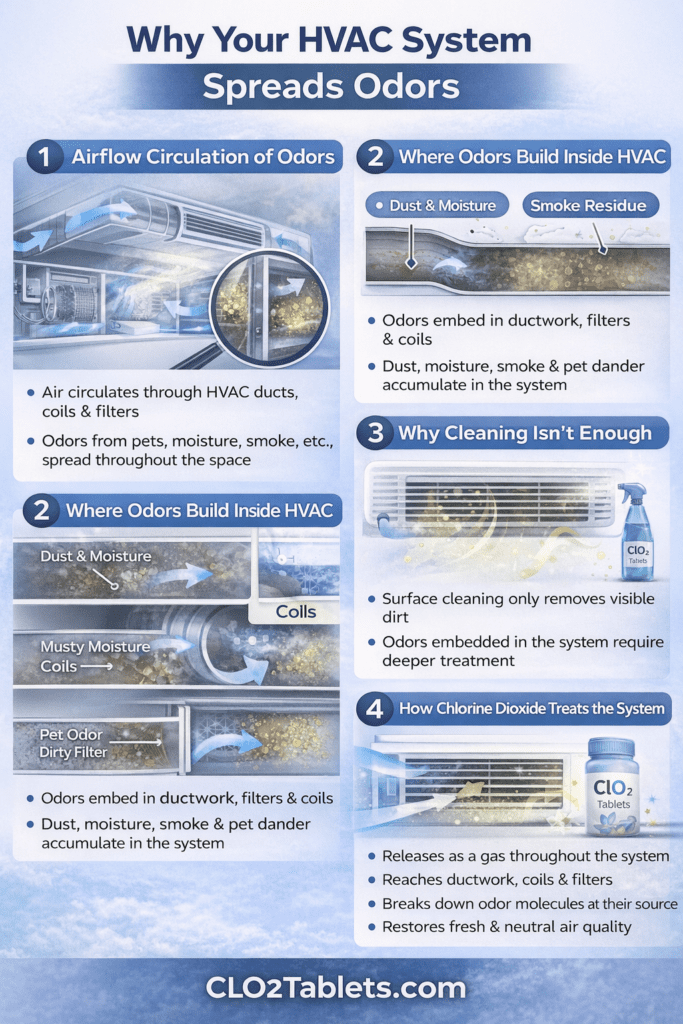
    infograph showing Chlorine dioxide impact on HVAC systems


    Operational Benefits Beyond Air Quality

    This is where it gets interesting for decision-makers:

    ✔ Improved Airflow Efficiency

    Cleaner systems allow air to move more freely.

    ✔ Reduced Recurring Odor Complaints

    Especially in:

    • Property management
    • Hospitality
    • Office environments

    ✔ Extended System Performance

    Less buildup = less strain on components.


    Use-Case Scenario (Real-World)

    A property manager prepares a unit for new tenants.

    The space has been cleaned—but once the HVAC turns on:
    👉 A musty odor fills the unit.

    Surface cleaning didn’t fix it… because the source was inside the system.

    After a controlled chlorine dioxide treatment:

    • Odors are neutralized
    • Air feels clean—not fragranced
    • The unit is ready for occupancy

    Safe Application: What You Need to Know

    Let’s keep this grounded and responsible.

    Chlorine dioxide is highly effective—but it must be used correctly.

    Best practices:

    • Follow product instructions exactly
    • Use appropriate dosing for system size
    • Ensure proper ventilation guidance is followed
    • Avoid direct handling without precautions

    👉 Like any professional-grade solution, results come from proper use—not shortcuts.


    Why Indoor Air Quality Matters More Than Ever

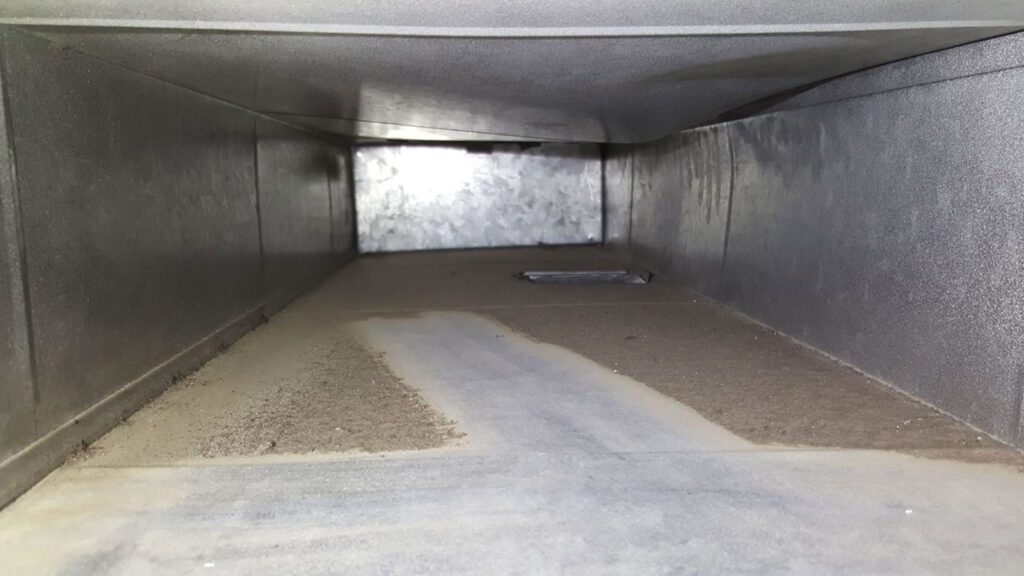
    A great threat to your family's health are dirty air ducts filled with bacteria

    Today’s buildings are:

    • More sealed
    • More energy-efficient
    • Less naturally ventilated

    Which means:
    👉 What’s in your air… stays in your air.

    At the same time:

    • Occupants are more sensitive to odor and air quality
    • Businesses are judged by environmental comfort
    • Buyers notice air immediately upon entering a space

    Why Chlorine Dioxide Tablets Stand Out for HVAC Treatment

    Most solutions treat parts of the system.

    Chlorine dioxide treats the environment as a whole system.

    The difference:

    • Not surface-level
    • Not temporary
    • Not fragrance-based

    👉 It’s a source-level environmental treatment


    Final Thoughts: Treat the System, Not Just the Symptoms

    If your HVAC system is contributing to poor air quality,
    you don’t just need cleaning—you need targeted treatment.

    Chlorine dioxide tablets offer a way to:

    • Reach hidden areas
    • Eliminate odor at the source
    • Support a cleaner, more breathable indoor environment

    Call to Action

    If you’re dealing with recurring HVAC odors or inconsistent indoor air quality, it may be time to go beyond traditional cleaning methods.

    Explore how chlorine dioxide tablets can help restore your air system and improve the environment you live or work in.


    (FAQs)

    1. Can chlorine dioxide be used in HVAC systems?

    Yes, chlorine dioxide can be used as part of a controlled environmental treatment process to address odors within HVAC systems when applied according to product guidelines.


    2. Does chlorine dioxide clean air ducts?

    It helps treat odor-causing compounds within ductwork by interacting with them at a molecular level, complementing physical cleaning methods.


    3. Will chlorine dioxide remove musty HVAC smells?

    Yes, it is commonly used to neutralize musty odors caused by moisture-related buildup within HVAC systems.


    4. Is chlorine dioxide safe for HVAC components?

    When used correctly and at proper concentrations, it is designed for controlled use without damaging system components.


    5. How does chlorine dioxide improve indoor air quality?

    By eliminating odor-causing molecules within the air system, it helps create a cleaner and more neutral indoor air environment.


    6. Can chlorine dioxide reach inside ductwork?

    Yes, as a gas, it disperses through the HVAC system and reaches areas that are difficult to access with traditional cleaning methods.


    7. How long does HVAC odor treatment take?

    Treatment duration depends on system size and odor severity but can range from several hours to a few days.


    8. Does this replace HVAC cleaning?

    No, it complements physical cleaning by addressing odor sources that cleaning alone may not fully eliminate.


    9. Can it help with pet or smoke odors in HVAC systems?

    Yes, chlorine dioxide is effective at neutralizing odors from pets, smoke, and other organic sources within air systems.


    10. Why do HVAC odors keep coming back?

    Because the source of the odor often remains inside the system, traditional cleaning methods may not fully eliminate it.