Tag: greenhouse sanitation protocol

  • What Causes Mold Pressure in Greenhouses and How Is It Reduced?

    What Causes Mold Pressure in Greenhouses and How Is It Reduced?

    Mold Pressure: The Invisible Environmental Load

    Growers often describe “fighting mold” as if it were a single outbreak.

    In reality, mold pressure is cumulative.

    Mold pressure refers to the overall concentration of spores, organic substrates, moisture conditions, and surface contamination that allow fungal growth to establish quickly in an enclosed environment.

    Greenhouses are engineered for plant amplification:

    • Warm temperatures
    • Elevated humidity
    • Frequent irrigation
    • Organic growing media
    • Enclosed air systems

    Those same conditions amplify microbial opportunity.

    The goal is not sterilization. The goal is load management.


    The Four Primary Drivers of Mold Pressure
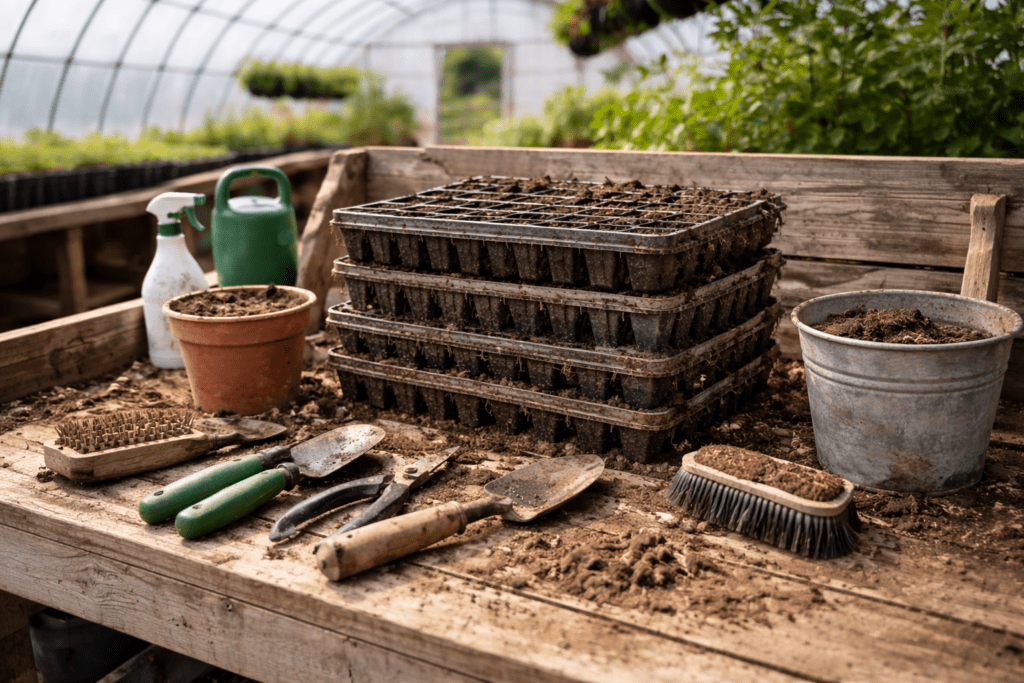
    Greenhouse potting bench with used propagation trays and contaminated gardening tools awaiting cleaning, highlighting greenhouse sanitation, biofilm risk, and seed tray hygiene between crop cycles.

    1. Persistent Humidity

    Relative humidity above 70% significantly increases fungal viability. Condensation on poly film, structural framing, and bench undersides creates microclimates where spores can germinate.

    Nighttime cooling followed by daytime heating creates repeated condensation cycles — ideal for fungal establishment.

    2. Organic Debris Accumulation

    Dead leaves, root fragments, spilled media, and algae buildup provide nutrient sources for mold.

    Organic debris under benches and along walkways is often overlooked.

    Spores do not need much.

    3. Biofilm in Irrigation Systems

    As discussed in hydroponic sanitation, biofilm acts as a microbial reservoir. When irrigation systems circulate water through contaminated lines, microbial load increases across the growing environment.

    Aerosolized droplets can distribute spores and bacteria.

    Water quality influences air quality.

    4. Cross-Contamination Between Crop Cycles

    Reusable trays, tools, benches, and containers carry microbial residues forward unless properly sanitized.

    Without a reset protocol, each crop cycle begins with elevated baseline pressure.

    Mold pressure compounds.

    Also Read🌱How Should You Sanitize a Greenhouse Before Seedling Season?


    Recognizing Elevated Mold Pressure Early

    Mold pressure does not always announce itself dramatically.

    Early indicators include:

    • Musty odors in enclosed areas
    • Algae growth on floors or troughs
    • Uneven seedling vigor
    • Increased damping-off incidence
    • Surface discoloration on benches or trays

    By the time visible mold appears on plants, environmental load has already been high for days or weeks.

    Prevention begins long before visible symptoms.


    Reducing Mold Pressure: A Structured Approach
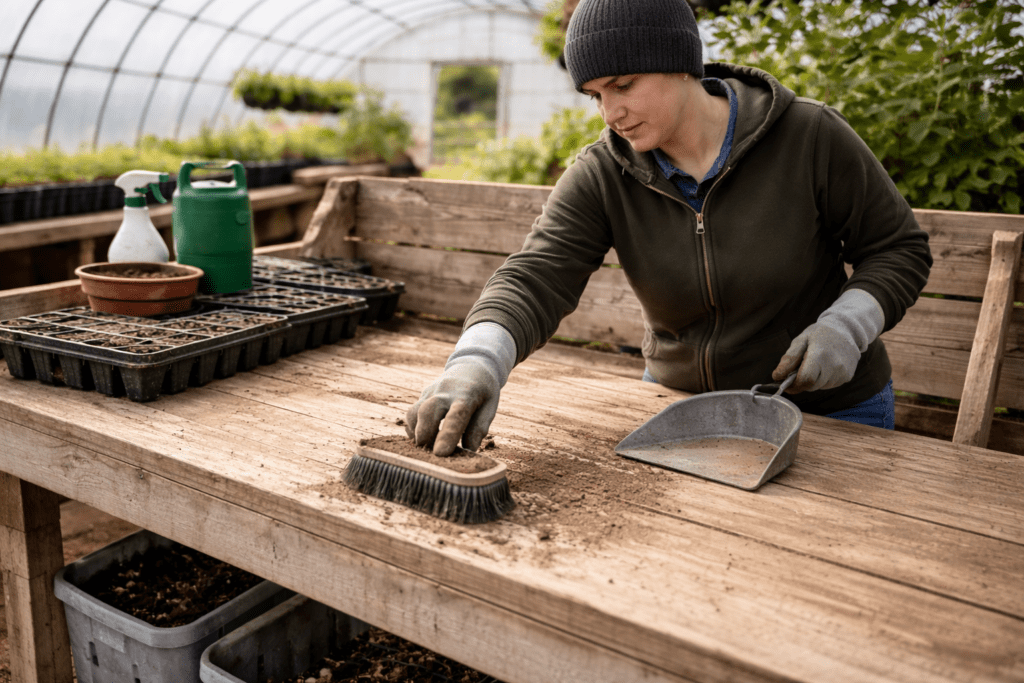
    physical debris removal reduced mold overload in greenhouses.

    Effective mold pressure reduction combines mechanical cleaning, sanitation, and environmental management.

    Step 1: Physical Cleaning

    • Remove organic debris
    • Sweep under benches
    • Scrub algae-prone areas
    • Drain and clean reservoirs

    Mechanical cleaning lowers nutrient availability for microbial growth.

    Step 2: Surface and Tray Sanitation

    Applying a properly diluted oxidizing sanitation solution to:

    • Benches
    • Tools
    • Reusable trays
    • Structural surfaces

    Chlorine dioxide (ClO₂), when used according to guidelines, functions as a selective oxidizer. It disrupts microbial cell walls and oxidizes organic residues without relying on hypochlorous acid chemistry or forming heavy chlorinated byproducts commonly associated with traditional chlorine.

    Residue management matters in enclosed environments.

    Step 3: Irrigation Line and System Hygiene

    Circulating an appropriate sanitation solution through drained systems between crop cycles reduces biofilm mass and microbial reservoirs.

    System-wide sanitation prevents recontamination of clean surfaces.

    Step 4: Airflow and Moisture Management

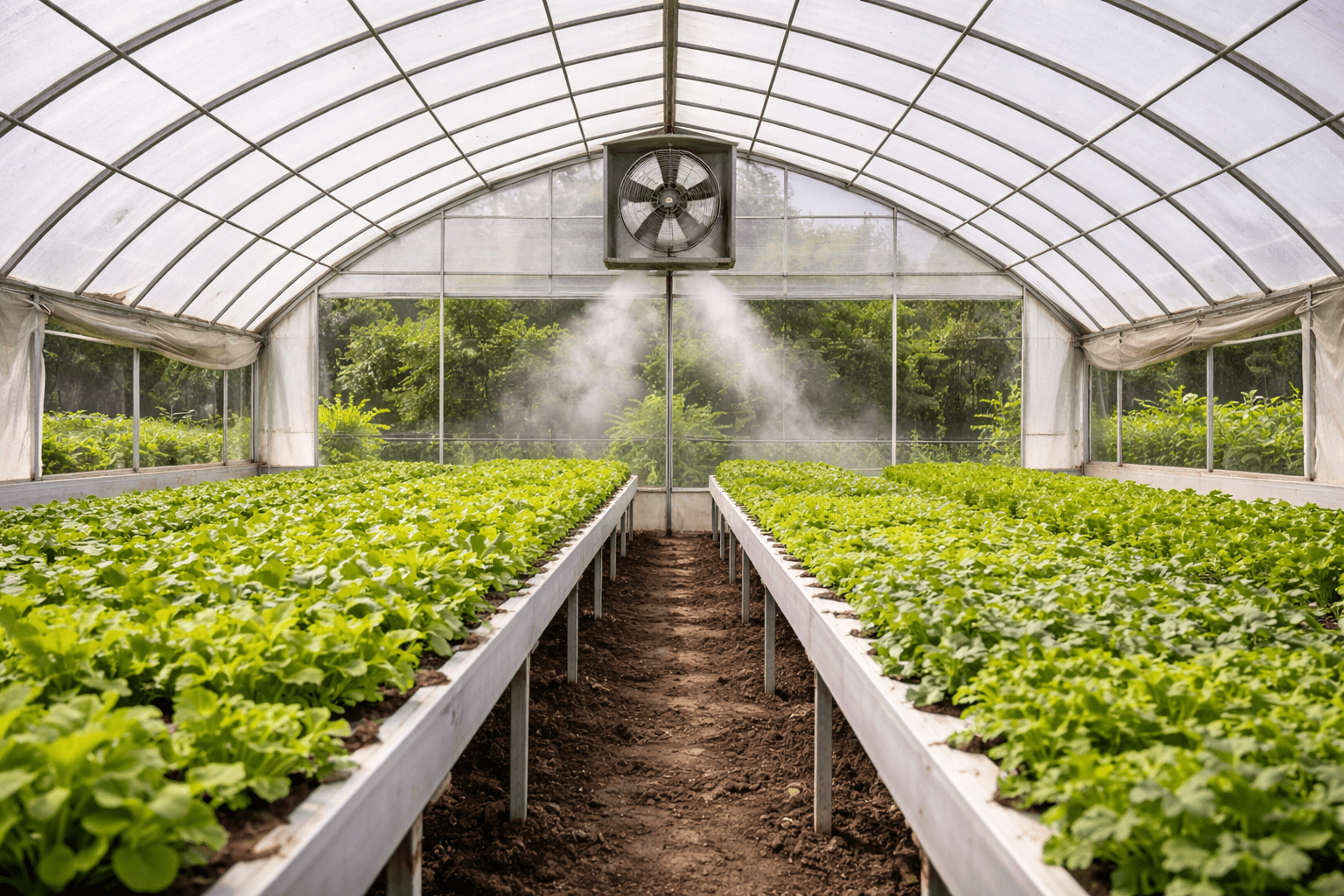
    • Increase horizontal airflow
    • Reduce condensation zones
    • Monitor relative humidity
    • Improve drainage

    Sanitation without airflow control is incomplete.

    Environmental consistency requires both.


    Mold Pressure and Controlled Environment Agriculture in 2026

    Controlled environment agriculture continues expanding globally. With that expansion comes:

    • Increased documentation of sanitation procedures
    • Greater attention to water quality
    • Integration of hygiene protocols into SOPs
    • More scrutiny of post-harvest and pre-harvest environments

    Small and mid-scale growers are adopting infrastructure hygiene strategies traditionally associated with larger operations.

    Mold pressure management is becoming part of operational discipline, not just reactive treatment.

    Infrastructure hygiene reduces variability.

    Also Read 🌱Proper CLO2 PPM for Safe & Effective Use In Agriculture


    Common Misconceptions About Mold in Greenhouses
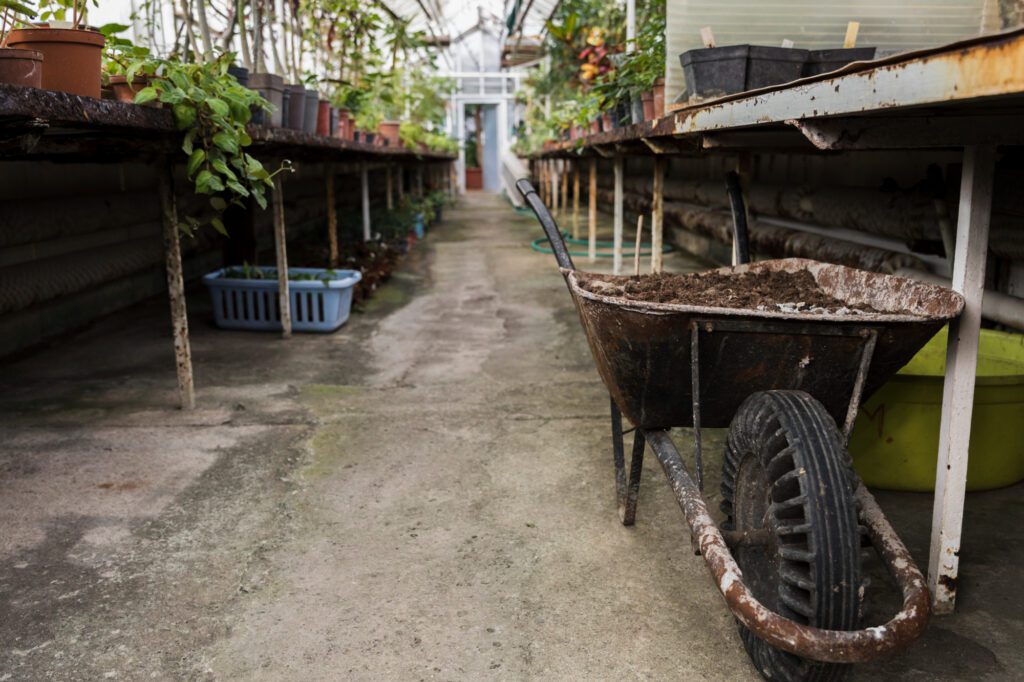
    debris removal and clean evironment keeps mold overload under control.

    “If I don’t see mold, it’s not present.”
    Spores are microscopic and constantly circulating.

    “Bleach solves everything.”
    Surface disinfection without debris removal and system sanitation leaves microbial reservoirs intact.

    “It’s just part of greenhouse growing.”
    While some microbial presence is unavoidable, unmanaged mold pressure increases crop risk unnecessarily.

    The difference between normal microbial presence and elevated pressure is measurable in consistency.


    Conclusion: Mold Pressure Is Managed, Not Eliminated

    Greenhouses are dynamic ecosystems.

    Complete sterility is neither practical nor desirable. However, unmanaged microbial load leads to compounding environmental instability.

    By:

    • Removing organic debris
    • Sanitizing surfaces and trays
    • Cleaning irrigation systems
    • Managing humidity and airflow

    Growers reduce mold pressure and create a more stable growing environment.

    Mold pressure is not a single event. It is an environmental condition.

    Managing it requires structured sanitation and infrastructure awareness.

    Consistency grows where hygiene is intentional.


    (FAQs)

    1. What is mold pressure in a greenhouse?
    Mold pressure refers to the cumulative concentration of spores, organic material, humidity, and contamination that increase the likelihood of fungal growth.

    2. What causes mold to grow in greenhouses?
    High humidity, organic debris, poor airflow, and microbial buildup in irrigation systems contribute to mold development.

    3. Can irrigation systems increase mold pressure?
    Yes. Biofilm and contaminated water lines can act as microbial reservoirs.

    4. How do you reduce mold pressure before planting?
    Remove debris, sanitize surfaces and trays, clean irrigation systems, and manage humidity levels.

    5. Does sanitation eliminate all mold spores?
    No. Sanitation reduces microbial load but does not sterilize environments completely.

    6. Why is humidity control important in greenhouses?
    High humidity and condensation create favorable conditions for fungal growth.

    7. Should trays be sanitized between crop cycles?
    Yes. Reusable trays can carry contamination forward if not properly cleaned.

    8. Is chlorine dioxide used for greenhouse sanitation?
    Yes. Chlorine dioxide is used in agricultural sanitation due to its oxidizing properties.

    9. Can mold pressure affect seedling development?
    Elevated mold pressure increases the likelihood of damping-off and uneven growth.

    10. Is mold completely avoidable in greenhouse environments?
    No. Microbial presence is natural, but structured hygiene reduces excessive pressure.
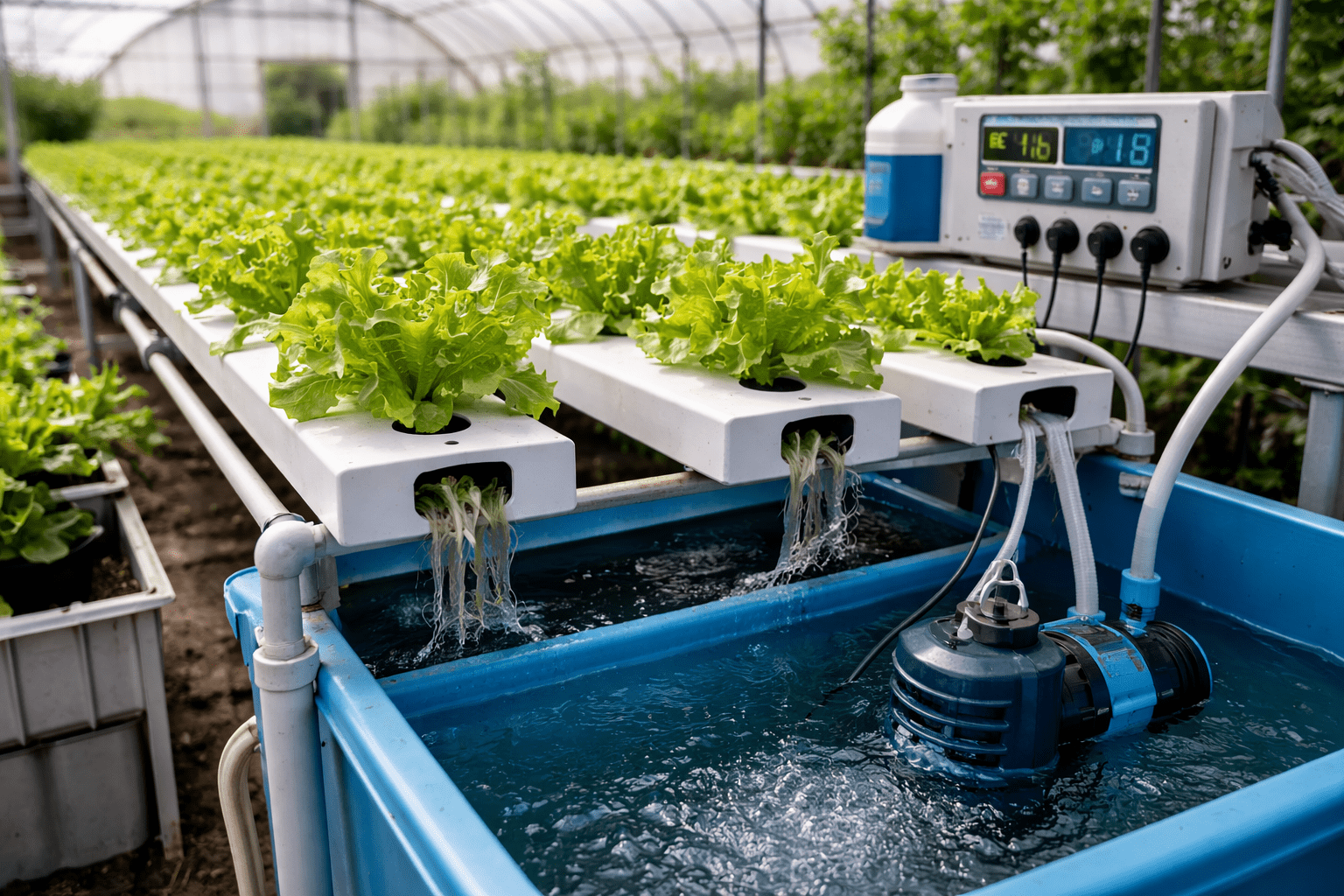
  • How Do You Maintain Hygiene in Hydroponic Systems?

    How Do You Maintain Hygiene in Hydroponic Systems?

    The Invisible Layer Inside Every Irrigation System

    Hydroponic and irrigation systems appear clean from the outside. Clear tubing. Flowing water. Measured nutrients.

    Inside those lines, however, conditions are ideal for microbial growth.

    Warm nutrient solution + oxygen + dissolved organic matter = microbial opportunity.

    Over time, microorganisms attach to interior surfaces and form biofilm — a structured microbial community embedded in a protective matrix. Biofilm does not float freely in water. It adheres to surfaces and protects the organisms within it from environmental stress.

    Once established, biofilm can:

    • Reduce flow efficiency
    • Harbor bacteria and fungi
    • Contribute to odor formation
    • Interfere with nutrient consistency
    • Increase overall mold pressure in enclosed environments

    Hydroponic hygiene is not about water clarity. It is about system integrity.


    What Is Biofilm and Why Does It Matter?

    Biofilm forms when microorganisms attach to surfaces and begin producing extracellular polymeric substances — essentially a protective glue-like matrix.

    In hydroponic systems, this occurs inside:

    • Reservoir walls
    • Drip lines
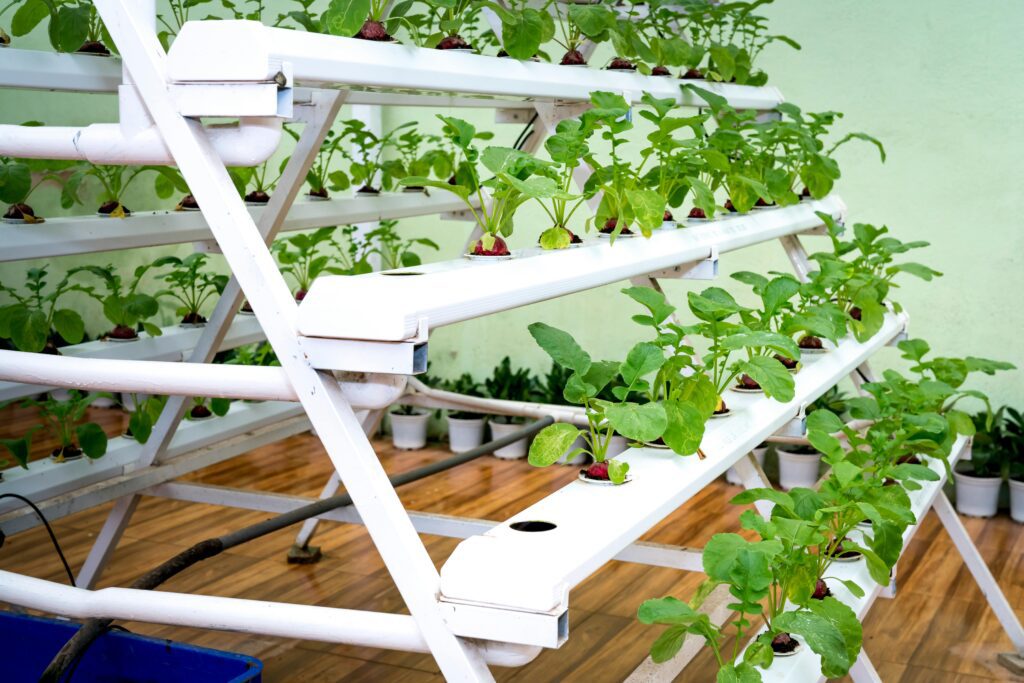
    • NFT channels
    • Emitters and misting heads
    • Return lines

    Once biofilm develops, it becomes more resistant to simple flushing.

    This matters because biofilm acts as a microbial reservoir. Even if water appears clean, biofilm can continually seed new microorganisms back into the system.

    Hydroponic sanitation is therefore not a one-time rinse. It is a controlled oxidation strategy.

    Also Read 🌱Biofilm Research & Odor Control: Breaking the Invisible Barriers with Chlorine Dioxide


    Signs Your Hydroponic System Needs Sanitation

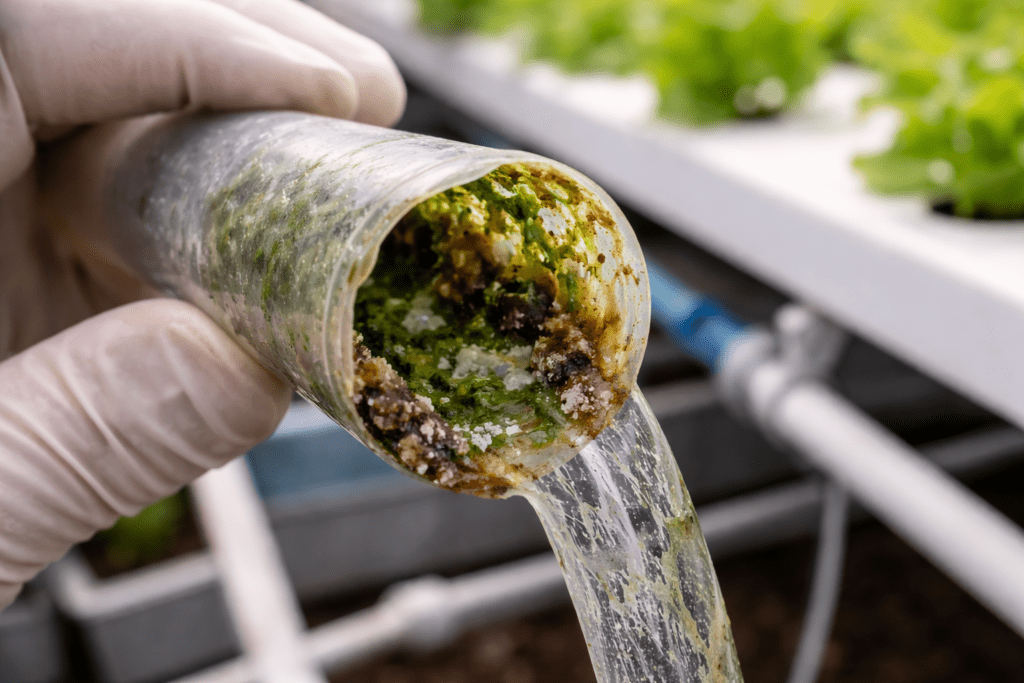
    Hydroponic tubing interior showing algae growth and biofilm accumulation, highlighting irrigation line sanitation, reservoir hygiene, and mold pressure control in controlled environment agriculture.

    Growers may notice subtle indicators before major problems occur:

    • Reduced or uneven emitter flow
    • Slime-like residue inside tubing
    • Musty or sour odors in reservoir areas
    • Cloudy nutrient solution
    • Inconsistent plant growth patterns

    These are not always dramatic failures. They are early indicators of increasing microbial load.

    In controlled environment agriculture, small inconsistencies compound over time.


    Cleaning vs. Sanitizing: A Critical Distinction

    Mechanical cleaning removes physical debris and sediment.

    Sanitizing reduces microbial load.

    For hydroponic systems, both are necessary.

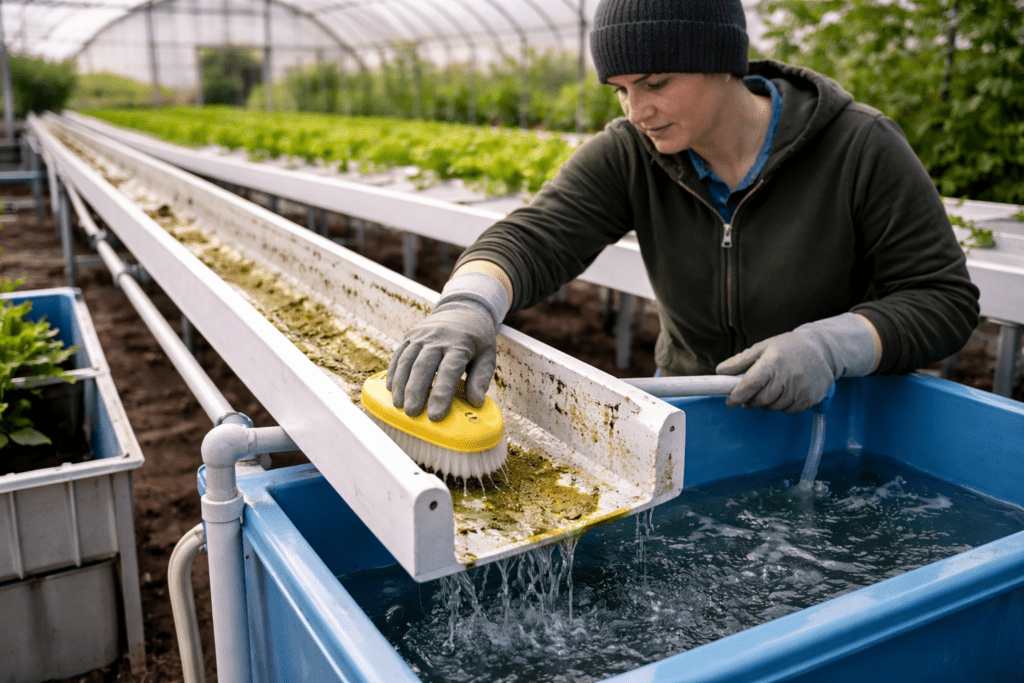
    Worker physically cleaning a drained hydroponic system with a brush, removing algae and biofilm to support hydroponic sanitation, reservoir hygiene, and mold pressure control in greenhouse production.

    Step 1: Drain and Physically Clean Reservoirs

    • Remove nutrient solution
    • Scrub interior surfaces
    • Remove sediment buildup
    • Inspect for mineral scaling

    Physical removal improves the effectiveness of sanitizing agents.

    Step 2: Flush Irrigation Lines

    Flushing lines with clean water removes loose debris but does not eliminate biofilm.

    Step 3: Apply an Oxidizing Sanitation Solution

    Oxidizing agents disrupt biofilm structure by breaking down organic compounds and damaging microbial cell walls.

    Chlorine dioxide (ClO₂) is widely used in water treatment because it:

    • Functions as a selective oxidizer
    • Penetrates biofilm layers
    • Does not rely on hypochlorous acid chemistry
    • Produces fewer chlorinated byproducts compared to traditional chlorine

    When properly diluted and circulated through irrigation systems between crop cycles, chlorine dioxide can help reduce biofilm mass and lower microbial pressure before new nutrient solutions are introduced.

    Always follow recommended dilution and application guidelines.


    Hydroponic Hygiene and Mold Pressure in Greenhouses

    Hydroponics has transformed modern agriculture. By growing plants in nutrient-rich water rather than soil, growers achieve faster growth, higher yields, and precise control over plant nutrition. 

    Greenhouses amplify moisture. When irrigation systems contribute to elevated microbial load, airborne spores and condensation zones compound the effect.

    In enclosed growing environments:

    • Evaporation increases ambient humidity
    • Aerosolized droplets can distribute microorganisms
    • Condensation surfaces provide new colonization points

    System sanitation therefore supports not just water quality, but overall greenhouse hygiene.

    Managing hydroponic biofilm is part of managing mold pressure.


    2026 and Beyond: Water Quality Scrutiny Is Increasing

    Agricultural water quality standards continue evolving in response to food safety expectations and controlled environment agriculture expansion.

    Growers — even small-scale operators — are increasingly:

    • Documenting sanitation procedures
    • Monitoring water quality metrics
    • Integrating system flush protocols into SOPs
    • Seeking sanitation solutions with lower residue profiles

    Hydroponic hygiene is shifting from reactive troubleshooting to proactive infrastructure management.

    Sanitation planning between crop cycles is becoming operational best practice.


    Common Mistakes in Hydroponic Sanitation

    Even experienced growers can undermine system hygiene by:

    • Only treating reservoirs but not lines
    • Ignoring return lines
    • Using incorrect dilution ratios
    • Skipping contact time
    • Reintroducing nutrients immediately without proper flushing

    Hydroponic sanitation works best when applied systematically across the entire water pathway.

    Partial cleaning leaves microbial strongholds intact.

    Also Read 🌱Hydroponics with ClO₂ — Cleaner Water, Healthier Crops


    Conclusion: Clean Water Pathways Support Consistent Growth

    Hydroponic systems deliver life directly to plant roots. That delivery system deserves structured hygiene attention.

    Biofilm development is natural. Left unmanaged, it becomes a source of microbial instability and operational inconsistency.

    Draining, cleaning, flushing, and applying properly diluted oxidizing solutions between crop cycles reduces microbial load and supports cleaner infrastructure.

    In controlled environment agriculture, invisible systems often matter most.

    Hydroponic hygiene is not an emergency response. It is part of building a more consistent growing operation.


    (FAQs)

    1. What is biofilm in a hydroponic system?
    Biofilm is a structured microbial community that attaches to surfaces inside reservoirs and irrigation lines.

    2. Why do hydroponic systems develop slime buildup?
    Slime buildup is often a sign of biofilm formation caused by microorganisms feeding on dissolved organic material.

    3. How often should hydroponic systems be sanitized?
    Sanitation is commonly performed between crop cycles and whenever microbial buildup is suspected.

    4. Can biofilm affect plant growth?
    Yes. Biofilm can interfere with nutrient delivery consistency and increase microbial pressure.

    5. Is flushing with water enough to clean irrigation lines?
    No. Water flushing removes debris but does not eliminate established biofilm.

    6. Is chlorine dioxide used for water sanitation?
    Yes. Chlorine dioxide is widely used in municipal and agricultural water treatment applications.

    7. What causes odor in hydroponic reservoirs?
    Odor often results from microbial growth and organic decomposition within the system.

    8. Does sanitation remove all microorganisms?
    No. Sanitation reduces microbial load but does not sterilize systems completely.

    9. Should irrigation lines be cleaned between crops?
    Yes. Cleaning between crop cycles reduces cross-contamination and buildup.

    10. Can poor system hygiene increase mold pressure in greenhouses?
    Yes. Elevated microbial load in irrigation systems can contribute to overall environmental mold pressure.