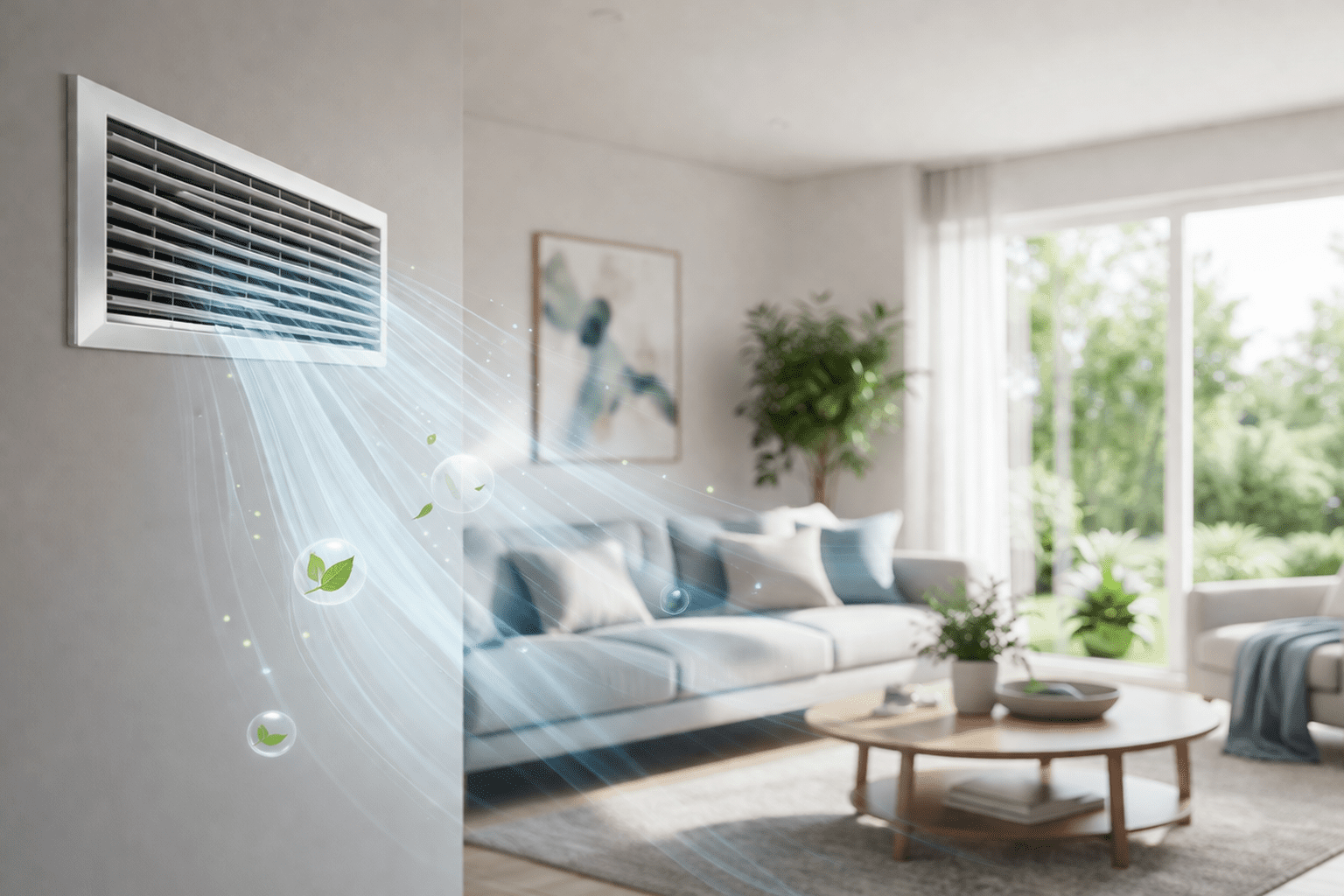
The Real Reason Odors Keep Coming Back
You clean.
You open windows.
You use sprays or candles.
And yet… the smell returns.
That’s not a cleaning problem.
👉 It’s a system problem.
Most recurring odors don’t live on surfaces—they live in:
- Air circulation pathways
- HVAC systems
- Porous materials
Which means every time air moves…
👉 the odor comes back with it.
Why “Fresh Air” Isn’t a Long-Term Solution
Opening windows feels like it works—and temporarily, it does.
But here’s the catch:
- It dilutes odors
- It doesn’t eliminate them
- It doesn’t address the source
Once the windows close…
👉 the environment resets to where it was.
Also Read Winter IAQ Solutions: Stop Wood Smoke, Dry Air & Stale Indoor Odors
Where Odors Actually Hide
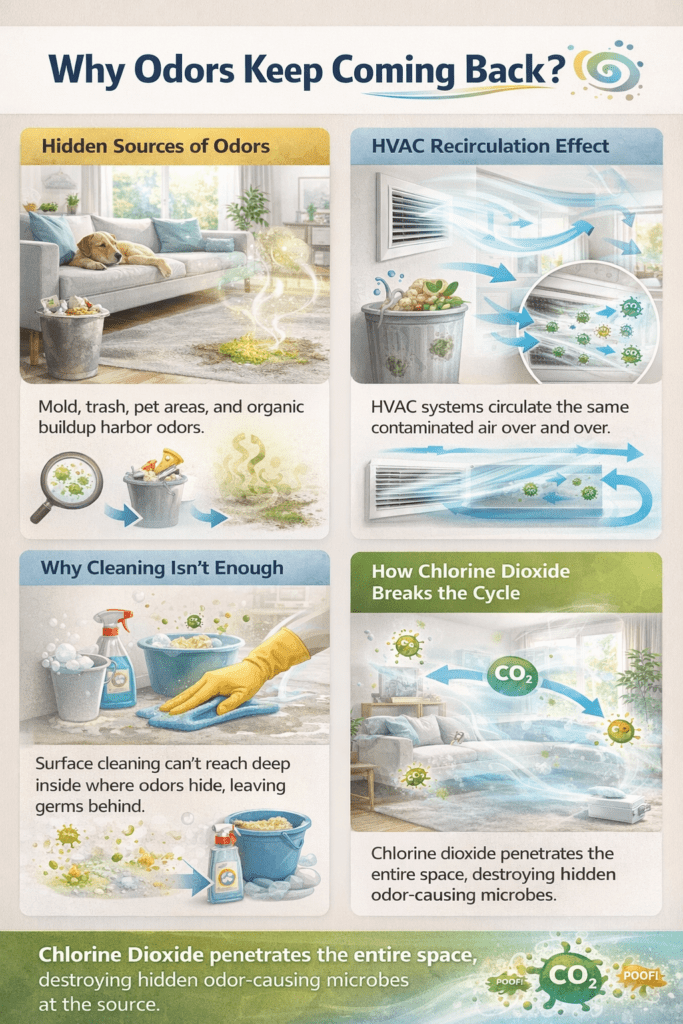
To stop odors, you have to understand where they live.
Primary Hidden Sources:
- HVAC ductwork
- Coils and condensation areas
- Filters and airflow systems
- Carpets and upholstery
- Subflooring and wall materials
These areas:
✔ Trap odor-causing compounds
✔ Protect them from surface cleaning
✔ Reintroduce them into the air continuously
Why Surface Cleaning Alone Fails
Let’s call it out clearly:
Surface Cleaning:
✔ Removes visible dirt
✔ Improves appearance
But it does NOT:
❌ Reach inside HVAC systems
❌ Eliminate airborne odor molecules
❌ Treat embedded contamination
👉 That’s why odors return—even in “clean” spaces.
The HVAC Connection: Your Hidden Odor Distributor
Your HVAC system doesn’t just move air—it moves everything in it.
If odor exists inside the system:
- It spreads room to room
- It recirculates continuously
- It becomes part of the environment
Common signs:
- Smell when AC or heat turns on
- Odors stronger in certain rooms
- “Clean house” that still smells off
The Shift: From Cleaning to Environmental Control
If you want odors gone for good,
you need to stop thinking in terms of cleaning…
…and start thinking in terms of environmental treatment.
How Chlorine Dioxide Prevents Odors from Returning
Chlorine dioxide (ClO₂) works differently.
It doesn’t:
- Cover odors
- Add fragrance
- Rely on repeated application
Instead, it:
✔ Targets Odor Molecules
Breaks them down at a chemical level
✔ Moves Through the Entire Air System
Reaches:
- Ductwork
- Coils
- Hidden airflow zones
✔ Treats the Source
Not just where you smell it—but where it originates
Where It Makes the Biggest Difference
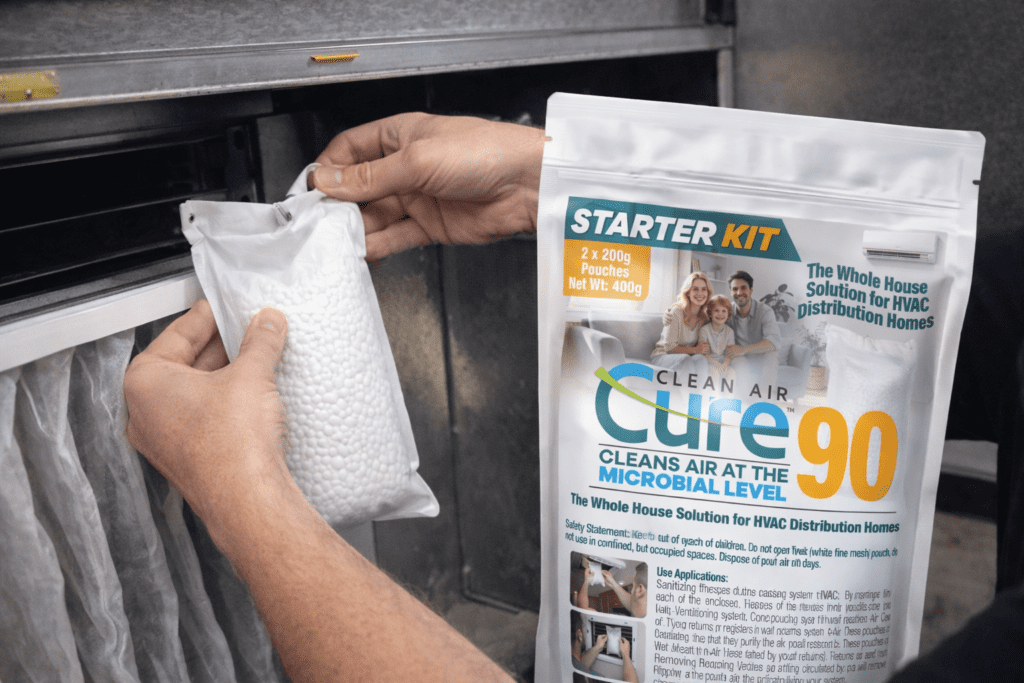
1. HVAC Systems
Stops odor recirculation at the source
2. Moisture-Prone Areas
Prevents odor buildup in:
- Basements
- Bathrooms
- Utility spaces
3. Whole-Home Airspace
Treats:
- Air
- Surfaces
- Hidden zones
4. Recurring Odor Environments
Ideal for:
- Pet-related odors
- Smoke exposure
- Rental turnovers
- Stale or musty homes
Also Read Will Professional Carpet Cleaning Remove Pet Odors?
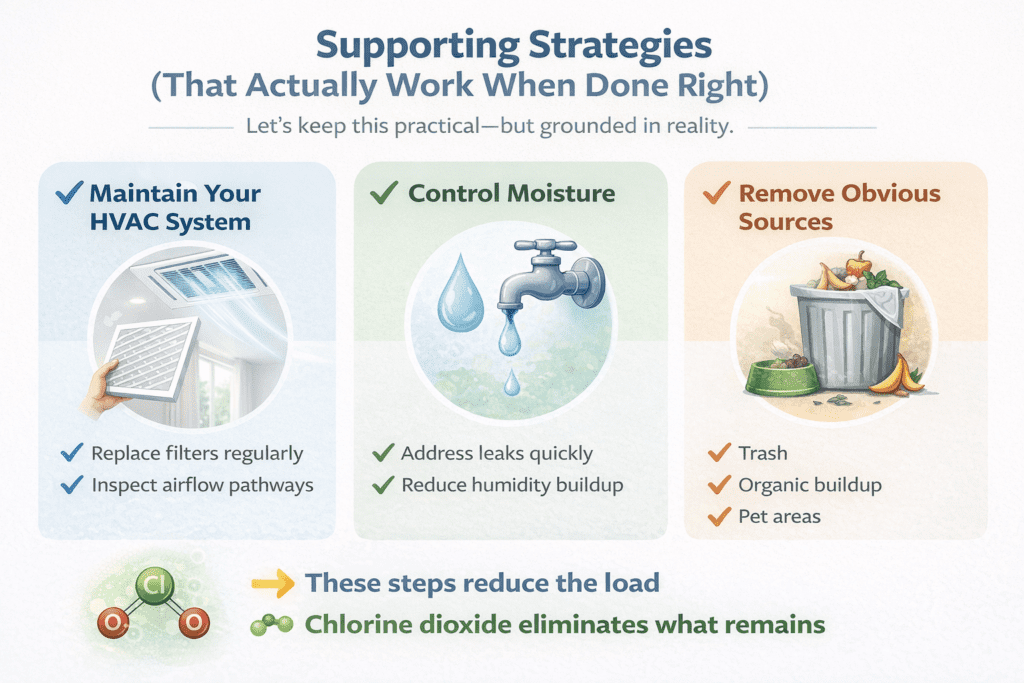
Use-Case Scenario
A homeowner:
- Cleans regularly
- Uses air purifiers
- Opens windows
But still notices:
👉 A stale, musty smell when the system runs
The issue?
Not the room.
👉 The HVAC system.
After a chlorine dioxide treatment:
- Odor source is neutralized
- Air feels clean—not fragranced
- The problem stops returning
Health, Comfort, and Perception

Air quality affects more than smell.
It impacts:
- Comfort
- Breathing experience
- Perception of cleanliness
- Overall indoor environment quality
When air is clean:
✔ Spaces feel better
✔ People stay longer
✔ Environments feel healthier
Also Read Ways to Prevent Persistent Odors From Returning for Good In 2026
Why This Matters More Today
Modern environments are:
- More sealed
- More energy-efficient
- Less ventilated
Which means:
👉 Odors and contaminants stay longer
At the same time:
- Expectations for air quality are rising
- Occupants notice air instantly
- First impressions matter more than ever
Final Thoughts: Stop the Cycle
If odors keep coming back,
it’s not because you’re not cleaning enough.
👉 It’s because the source hasn’t been eliminated.
Chlorine dioxide offers a way to:
- Treat the HVAC system
- Eliminate odor at the molecular level
- Prevent the cycle from repeating
Call to Action
If you’re ready to stop managing odors—and start eliminating them at the source—explore how chlorine dioxide tablets can help restore your indoor air environment.
(FAQs)
1. Why do odors keep coming back after cleaning?
Because the source of the odor often remains in HVAC systems or embedded materials, continuing to circulate through the air.
2. How can I stop odors from returning in my home?
By addressing the source of the odor—especially within air systems—rather than relying only on surface cleaning or fragrance-based solutions.
3. Can HVAC systems cause odors in a home?
Yes, HVAC systems can circulate odors throughout a space if buildup exists within ductwork, coils, or airflow pathways.
4. Does chlorine dioxide eliminate odors permanently?
It neutralizes odor-causing molecules at the source, which can provide long-lasting results depending on the environment.
5. Is opening windows enough to remove odors?
No, it only temporarily dilutes odors and does not eliminate the source.
6. Can chlorine dioxide reach hidden odor sources?
Yes, as a gas, it disperses through air systems and reaches areas that are difficult to access with traditional cleaning.
7. What causes musty smells in homes?
Often moisture buildup combined with airflow systems that distribute odor throughout the space.
8. Does this replace regular cleaning?
No, it complements cleaning by addressing deeper environmental odor sources.
9. How long does it take to eliminate odors?
Results vary, but noticeable improvements can occur within hours to days.
10. What makes chlorine dioxide different from air fresheners?
It eliminates odor at the molecular level rather than masking it with fragrance.