
How to Clean Your Electric Tea Kettle (and Protect the Flavor of Every Beautiful Cup of Tea)
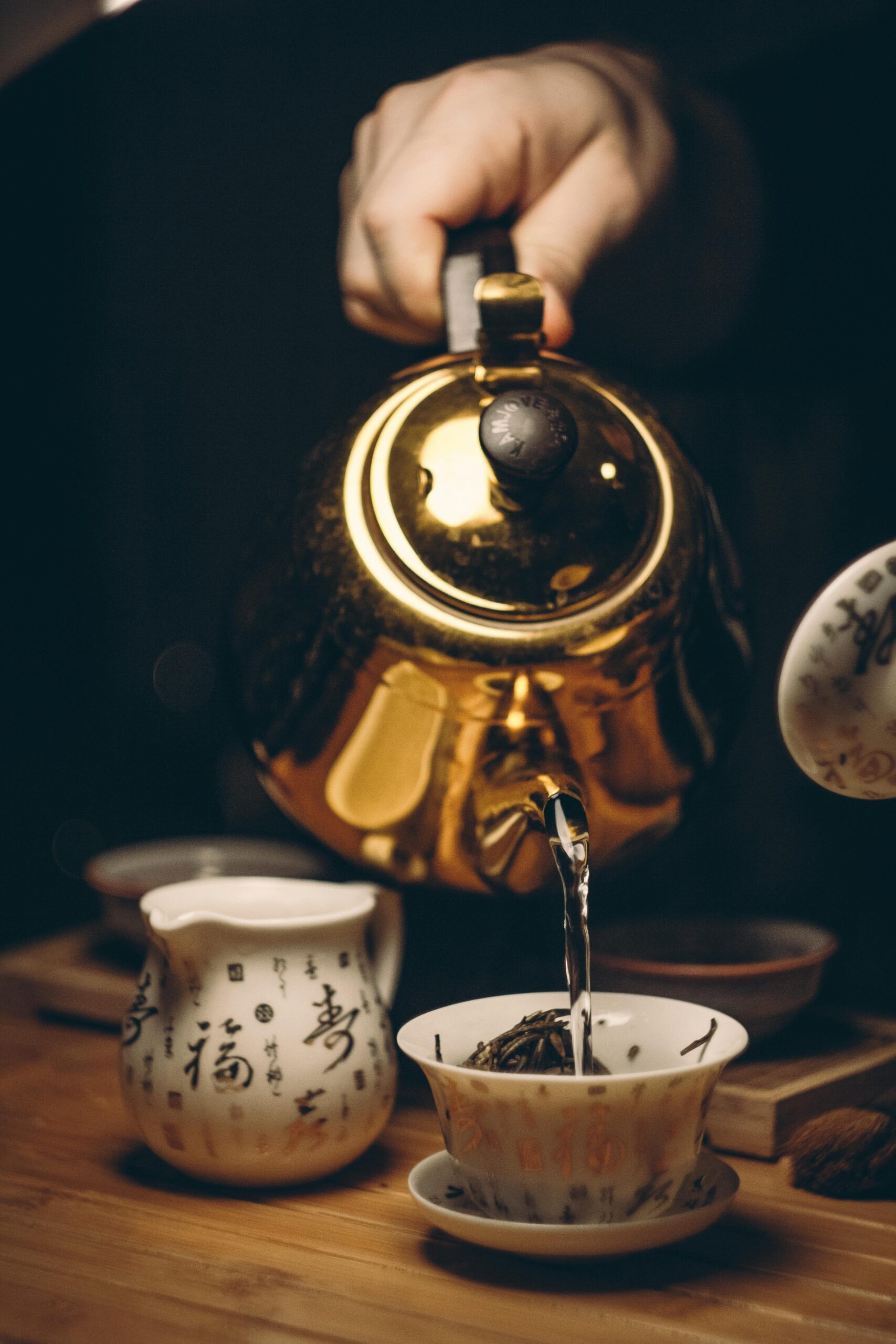 Did you know that tea has one of the most fascinating histories of any beverage. According to legend, it was discovered in 2737 BCE when dried leaves accidentally blew into Emperor Shen Nong’s boiling water — a happy mistake that launched thousands of years of tea culture. Archaeologists even found tea leaves buried with Emperor Jing of Han, proving tea was enjoyed by royalty over 2,000 years ago. The world’s most expensive tea, Da-Hong Pao, can sell for over $1 million per kilogram, making it literally worth more than gold. From ancient rituals to modern mugs, tea has always been a treasure.
Tea has a way of slowing life down. There’s something comforting about listening to that soft rumble as the kettle warms, feeling the steam rise, and finally taking that first sip. Whether you're a full–blown tea connoisseur who can identify delicate notes of jasmine or bergamot, or you simply enjoy a quiet cup before the world wakes up, the experience depends on more than just good tea leaves.
It depends on the water.
And the truth is… your electric tea kettle might be quietly sabotaging your tea.
If your kettle has mineral rings, chalky buildup on the bottom, white flakes floating in the water, or a slightly “metallic” smell that wasn’t there before — your tea is already paying the price.
Fortunately, restoring your kettle to its pristine, tea-honoring glory is easier than you think. And you don’t need harsh chemicals or aggressive scrubbing. A chlorine dioxide cleaning tablet handles the dirty work for you, leaving your kettle fresh, clean, and ready to brew something delicious.
The Secret Influence Your Tea Kettle Has on Flavor
Tea drinkers know that flavor is delicate. High-quality teas — the ones with floral, earthy, woody, or fruity notes — can shift dramatically depending on water purity. Even casual tea drinkers notice when something tastes “off,” “flat,” or strangely bitter.
Mineral buildup inside a kettle does far more than look unpleasant:
- It changes the mineral balance of the water itself.
- Scale can introduce metallic or chalky flavors.
- Deposits cause uneven heating, which affects extraction.
- Biofilm (yes, it forms even in kettles) can create odor contamination.
Tea enthusiasts spend good money on loose-leaf blends, herbal infusions, green teas, and specialty oolongs. But if the water comes from a kettle coated with scale, the most exquisite tea becomes mediocre. Imagine pairing an expensive wine with a plastic cup — technically it works, but it doesn’t honor the experience.
A clean kettle brings the water back to neutral — pure, balanced, flavorless — the ideal canvas for your tea.
Why Electric Tea Kettles Build Up Mineral Deposits
Most households and small businesses use water that contains a mix of dissolved minerals such as:
- Calcium
- Magnesium
- Silica
- Iron trace minerals
When the kettle heats water, these minerals separate and harden into the chalky, crusty layer commonly known as “scale.” Over time, scale can:
- Form thick white or brown patches
- Create cloudy films along the inner walls
- Slow the kettle’s heating efficiency
- Reduce the lifespan of the heating element
- Make water taste metallic, stale, or dusty
If you run a small café, spa, boutique hotel, or office breakroom, a poorly maintained kettle isn’t just a nuisance — it affects customer experience. And if you're brewing tea for yourself at home, it can dull the magic of a peaceful moment.
Luckily, you can easily reverse all of this.
Traditional Ways People Try to Clean Mineral Buildup — and Why They Fail
Most households (and plenty of small businesses) fight mineral deposits using whatever’s already in the pantry: vinegar, lemon juice, baking soda, citric acid — the usual suspects. They can help a little, but they rarely solve the deeper problem. Here’s why.
1. Vinegar
Vinegar is the go-to method because it’s cheap and mildly acidic, so it dissolves surface minerals.
Why it falls short:
- It only removes the top layer of scale.
- Thick chalky rings often stay behind, especially in hard-water areas.
- It does nothing to break down biofilm, the invisible slimy layer bacteria create that traps new minerals.
- The smell lingers inside the kettle — and no one wants vinegar-steamed tea.
- Repeated vinegar use can wear down rubber seals in some appliances.
Result:
The buildup comes back fast, sometimes within just a few boil cycles.
2. Lemon Juice
A natural acid that smells better than vinegar and loosens light deposits.
Why it falls short:
- It’s too weak for dense scale.
- It doesn’t sanitize.
- It can't penetrate stubborn mineral layers.
- It leaves a sticky residue if not rinsed thoroughly.
Result:
Great for freshening, not great for true descaling.
3. Baking Soda
People love it because it deodorizes and feels safe, but baking soda is alkaline — the opposite of what dissolves mineral scale.
Why it falls short:
- It doesn’t dissolve minerals at all.
- It can actually react with mineral deposits to create a gritty paste that’s harder to rinse out.
- It also has zero sanitizing power.
Result:
Your kettle might smell better… but it won’t be cleaner.
4. Citric Acid Powder
Citric acid is stronger than lemon juice and more effective at loosening scale.
Why it falls short:
- It still won’t tackle biofilm.
- It struggles with thick, layered mineral buildup.
- It doesn’t neutralize odors.
- Multiple treatments are often needed.
Result:
Better than vinegar, but still incomplete.
5. Harsh Chemical De-scalers
Some people use commercial descaling liquids meant for coffee machines.
Why they fall short:
- Many contain corrosive chemicals that aren’t ideal for kettles with exposed heating elements.
- They smell strong and require excessive rinsing.
- They sanitize somewhat but still don’t break through biofilm effectively.
Result:
They work, but they’re messy, smelly, and not always kettle-safe.
 So What’s the Real Problem With These Methods?
 So What’s the Real Problem With These Methods?
Traditional cleaners — even acidic ones — only address mineral scale, not the biofilm underneath.
Biofilm is the thin, invisible layer where bacteria cling and minerals reattach. If you don’t break it down:
- scale returns
- odors return
- discoloration remains
- heating efficiency drops again
Think of biofilm like double-sided tape:
You can peel off the outer stuff, but if the sticky layer stays behind, everything sticks right back on.
That’s why you clean your kettle… and the buildup comes back like it never left.
Why Chlorine Dioxide Succeeds Where Others Fail
Chlorine dioxide penetrates both:
- the mineral layers
- the biofilm underneath
It oxidizes the residue at a molecular level, leaving surfaces clean, odor-free, and smooth — so minerals have nothing to cling to next time.
It's not just cleaning.
It’s resetting the kettle to like-new condition.
How to Clean Your Electric Tea Kettle Using a Chlorine Dioxide Tablet
This method is safe, simple, and highly effective because chlorine dioxide (CLO₂) works differently than vinegar, citric acid, or typical de-scalers. It penetrates mineral buildup, dissolves biofilm, neutralizes odors, and sanitizes surfaces — all without the harshness of bleach or fumes.
Let’s walk through it step by step.
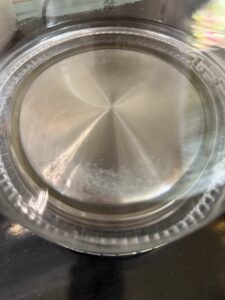
Step 1 — Let the Kettle Cool and Empty It Completely
Unplug the kettle and make sure it’s not warm. Pour out any remaining water.
This ensures the cleaning tablet dissolves evenly and safely.
You will be able to see the mineral deposit build up on the bottom very easily at this point.
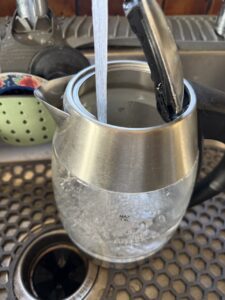
Step 2 — Fill the Kettle Halfway with Warm Water
Warm water activates the tablet faster, helping it dissolve evenly and boosting cleaning strength.
Avoid boiling water — that’s too hot and unnecessary.
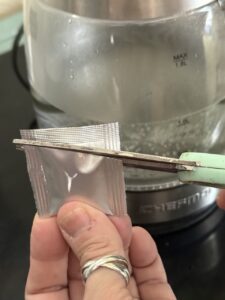
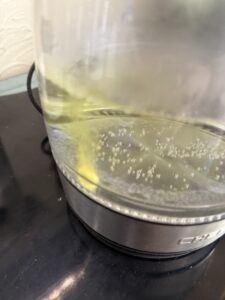
Step 3 —Drop in One Chlorine Dioxide Cleaning Tablet
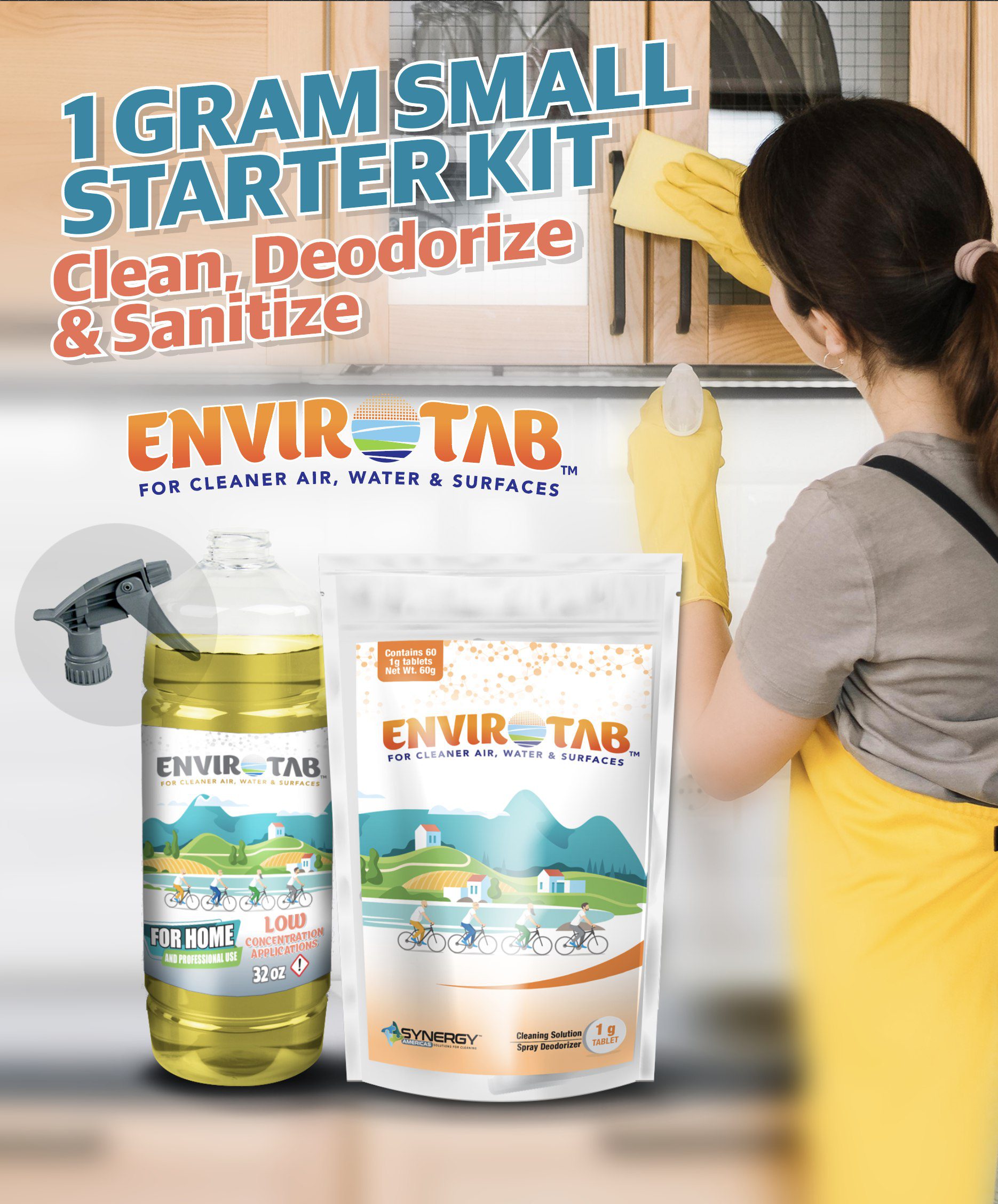
A 1 gram CLO₂ tablet begins working immediately. As it dissolves, it releases active oxygen that breaks apart:
- Mineral scale
- Cloudy deposits
- Tea tannin stains
- Biofilm layers
- Odors and organic residue
You don’t need to stir. You don’t need to scrub.
Just let the science do the heavy lifting.
🛒Buy your 1gram tablets today!

Step 4 — Let the Kettle Soak for 5 Minutes
This is the part where the magic happens. You may even see bits of scale lifting and floating upward — a strangely satisfying sight.
For severe buildup, you can let it soak longer without damaging the kettle.
If this is the first time and you have heavy build up I would suggest 20 - 30 minutes to soak.
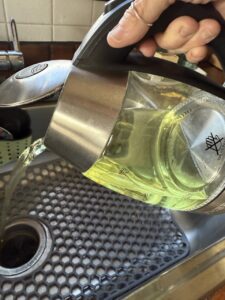
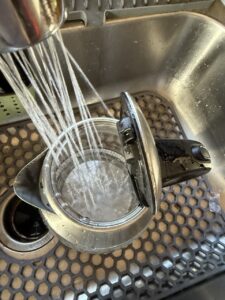
Step 5 — Dump the Solution and Rinse Thoroughly
Pour out the solution and rinse several times with fresh water.
If any loose mineral flakes remain, they’ll wash right out.
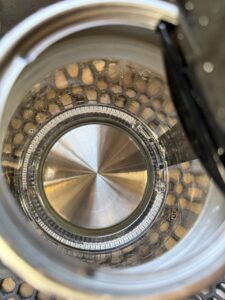
Step 6 — Wipe Away Remaining Residue
If you've had years of scale buildup, use a soft cloth or sponge to wipe the interior.
No abrasives. No metal scrapers.
The tablet already loosened everything — consider this just a finishing touch.
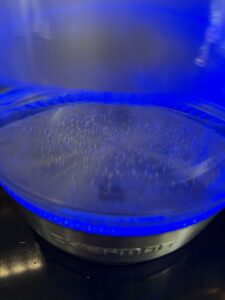
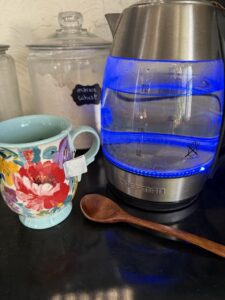
Step 7 — Do a Fresh-Water Boil and Pour It Out
Fill the kettle with clean water, bring it to a boil, then discard it.
This final step resets the kettle and prepares it for perfect, flavor-neutral brewing.
Your kettle is now:
- Clean
- Descaled
- Odor-free
- Sanitized
- Ready to bring out the true character of your tea
👉🏼Also Read How to Clean a Keurig with a 1-Gram ClO₂ Tablet | Fast, Safe & No Aftertaste
A Cozy Little Tea Moment (Because Cleaning Should Also Inspire Brewing)
Imagine this: It’s early morning. The house is quiet. You fill your newly cleaned kettle, and instead of that faint metallic smell, all you notice is the soft scent of steam. You scoop your favorite loose-leaf tea — maybe something fruity, maybe something deep and earthy — and as it steeps, the aroma fills the room in a way it hasn’t in months.
Tea lovers know the nuances: grassy green teas, buttery oolongs, floral whites, smokey lapsang souchong.
Some can taste mineral notes. Some detect the terroir — the soil and climate where the leaves grew. Some can even tell the difference between spring and autumn harvests.
But no matter how sophisticated (or simple!) your tea preferences are, one truth remains beautifully universal:
If your water isn’t clean, your tea can never reach its full potential.
A clean kettle brings back those delicate flavors — the crispness, the clarity, the purity — letting every tea leaf shine exactly the way nature intended.
How Often Should You Clean Your Tea Kettle?
For home use:
Every 2-4 weeks depending on your water hardness.
For small businesses:
Weekly is ideal, especially for cafés, salons, spas, and offices where the kettle runs multiple times a day.
For hard-water regions:
You may need light descaling every 5–7 days.
(Your kettle will start telling you — heating slows, and white spots return.)
Why CLO₂ Tablets Beat Vinegar or Citric Acid
Vinegar leaves a strong smell and often requires repeat rinsing.
Citric acid is gentler but doesn’t fully sanitize or break down biofilm.
Chlorine dioxide offers a deeper, more complete clean because:
- It destroys odor-causing molecules
- Breaks apart tough mineral scale
- Penetrates microscopic layers of residue
- Sanitizes without corrosive bleaching
- Leaves no aftertaste
Your kettle returns to “like new” condition — fast.
Small Business Bonus: Impress Customers With Better Tea & Coffee
If you're in hospitality, a clean kettle means:
- Better tasting customer beverages
- Longer appliance lifespan
- Improved sanitation standards
- Fewer complaints about “odd tasting water”
It’s a tiny maintenance task with a surprisingly large impact on customer satisfaction.
Conclusion
Tea is one of life’s simplest pleasures — and it deserves clean, pure water. With a quick soak using a chlorine dioxide cleaning tablet, your kettle stays bright, odorless, scale-free, and fully ready to elevate every cup you brew. Whether you’re making tea for yourself, your family, or your customers, a clean kettle protects flavor, supports appliance health, and turns every sip into something worth savoring.
And now that your kettle is freshly refreshed… what tea are you brewing next?
🛒Buy your 1gram tablets today!
10 Frequently Asked Questions
 1. Can I use chlorine dioxide tablets in stainless steel kettles?
Yes! CLO₂ is safe for stainless steel, glass, silicone, and most modern kettle interiors.
2. Will the tablet leave a smell or taste?
No — once rinsed and boiled once, your kettle will be neutral and clean.
3. Is this safe for kettles with heating elements inside?
Yes. The solution works on internal elements without harming them.
4. How often should I descale my kettle?
Most households: every 1–2 weeks.
Heavy use or hard water: weekly.
5. Is CLO₂ better than vinegar?
It removes odors, biofilm, and heavy scale more completely — without the lingering vinegar smell.
6. Can this method help with rust spots?
It can lighten them if they’re mineral-related, but true corrosion needs manufacturer care.
7. Will it sanitize my kettle?
Yes — CLO₂ is an excellent sanitizer for surfaces and food-contact appliances.
8. Can I use cold water instead of warm?
Yes, but warm water helps dissolve the tablet faster.
9. Can I soak it overnight?
Absolutely — it won’t harm the kettle and may help with severe buildup.
10. Is this safe for households with children and pets?
Yes, as long as tablets are used according to instructions and stored out of reach.