
Winter Indoor Air Quality: Why Most Homes and Small Businesses Get It Wrong — And How ClO₂ Can Change Everything
Winter feels cozy. Hot drinks, warm blankets, fireplaces glowing… the perfect time to stay indoors.
But here’s the truth most people don’t realize: winter is the worst enemy of indoor air quality (IAQ).
As soon as the first frost hits, homes and small businesses across the northern hemisphere start suffering from:
- Mud, snow, and salt tracked in from outside.
- Dust accumulation kicked up by heaters and forced air systems.
- Lingering odors from cooking, pets, or closed-up spaces.
- Poor ventilation trapping bacteria, mold spores, and volatile organic compounds (VOCs) inside.
For homeowners, that means your favorite leafy greens or fresh berries could spoil faster, your living space may feel “stale,” and odors can linger despite hours of cleaning.
For small business owners, poor IAQ can impact employees, customers, and even revenue. No one enjoys a musty break room or a workspace that smells like yesterday’s lunch.
Here’s the shocking part: most people think the solution is cleaning more or spraying fragrances. But that’s not just ineffective — it’s masking the problem, not solving it.
The Top 1% Expert Perspective: What Most People Don’t Know
I spoke to an expert in indoor environmental hygiene — someone in the top 0.1% of professionals in this field worldwide — and their insight is eye-opening:
“Winter indoor air quality is not a surface problem. Most homeowners and small businesses fight the symptoms — dust, odors, and spoilage — but ignore the root cause: airborne microbial load and chemical contamination trapped inside cold, closed spaces. Cleaning alone only scratches the surface. To truly solve the problem, you need a continuous, micro-level solution that neutralizes contaminants at the source.”
In other words, the reason your home or small business still smells stale in winter isn’t because you’re lazy or your cleaners are ineffective — it’s because most winter IAQ problems happen in the air, not on the surfaces.
This changes everything. If you understand this, you’ll stop wasting hours on repetitive cleaning and start investing in solutions that actually target the problem.
Why Ordinary Winter Cleaning Fails
Let’s break it down. You might:
- Mop floors daily.
- Wipe counters and cabinets.
- Spray disinfectants or air fresheners.
- Run your HVAC filters on high.
And yet, by February, that same musty odor returns. Your produce spoils faster. Your office break room smells stale again.
Why? Because:
- Odors are airborne: They linger in invisible bacteria, mold spores, and VOCs — not just on the floor or fridge shelves.
- Fragrances mask, don’t remove: Sprays cover odors with chemicals that don’t neutralize the microbial or chemical sources.
- Cold weather traps contaminants: Windows are closed. Ventilation is reduced. Heating systems spread dust and allergens rather than eliminating them.
- Surface cleaning can’t reach everywhere: HVAC ducts, fridge compartments, and enclosed storage areas harbor unseen bacteria and mold that release odors constantly.
You’re basically fighting an invisible opponent with only 50% of the weapons. That’s why so many people feel like they’re cleaning twice for the same result.
Reframing the Problem: What If You Could Solve It Once?
Here’s where most homeowners and small business owners shift from frustration to control:
Imagine a solution that works continuously, quietly, and invisibly — neutralizing odors and reducing bacteria without your constant intervention.
Instead of:
- Cleaning the fridge every few days
- Re-wiping counters constantly
- Replacing filters weekly
You could:
- Set up a micro-level solution that works 24/7
- Reduce spoilage in your fridge and pantry
- Keep break rooms and workspaces smelling fresh
- Cut hours off your repetitive cleaning schedule
That’s not a pipe dream. That’s exactly what ClO₂ (chlorine dioxide) does.
How ClO₂ Changes Winter Indoor Air Quality
ClO₂ is a low-dose oxidizing gas that targets the root causes of odors and poor IAQ:
- Airborne bacteria and mold spores: ClO₂ neutralizes them at the molecular level, stopping odors before they reach your nose.
- Volatile Organic Compounds (VOCs): Common in closed winter environments, these are broken down instead of just masked.
- Surface contamination: Even surfaces that appear clean can harbor microorganisms that contribute to spoilage and odors.
The beauty of ClO₂ is that it works continuously. Once installed in a fridge, HVAC vent, break room, or enclosed area, it quietly purifies the air and neutralizes odors for weeks at a time, drastically reducing the need for repetitive cleaning.
Practical Applications for Homeowners and Small Businesses
 1. Refrigerators & Freezers
- Winter is peak time for produce, dairy, and leftovers.
- ClO₂ stops odors before they mingle — so pumpkin pie doesn’t taste like last night’s stuffing.
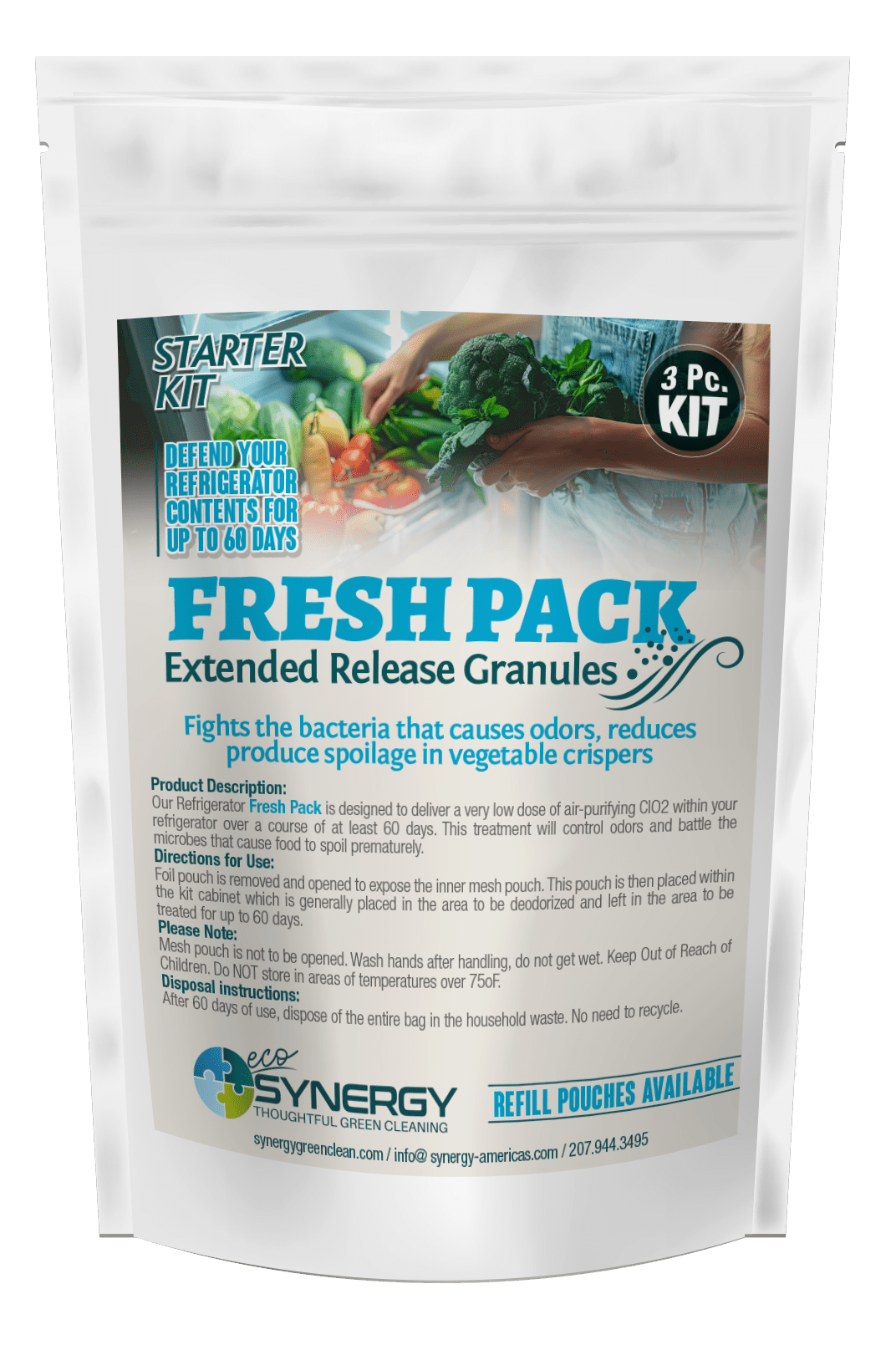
- Use our Refrigerator Fresh Pack and place in the crispers and at the back of the Frig.
Also Read 👉🏻How To Remove Bad Odor From Refrigerator?
2. Kitchens & Pantries
- Tracks in mud, salt, and pet dander.
- ClO₂ neutralizes bacteria and airborne contaminants that can cause lingering smells.
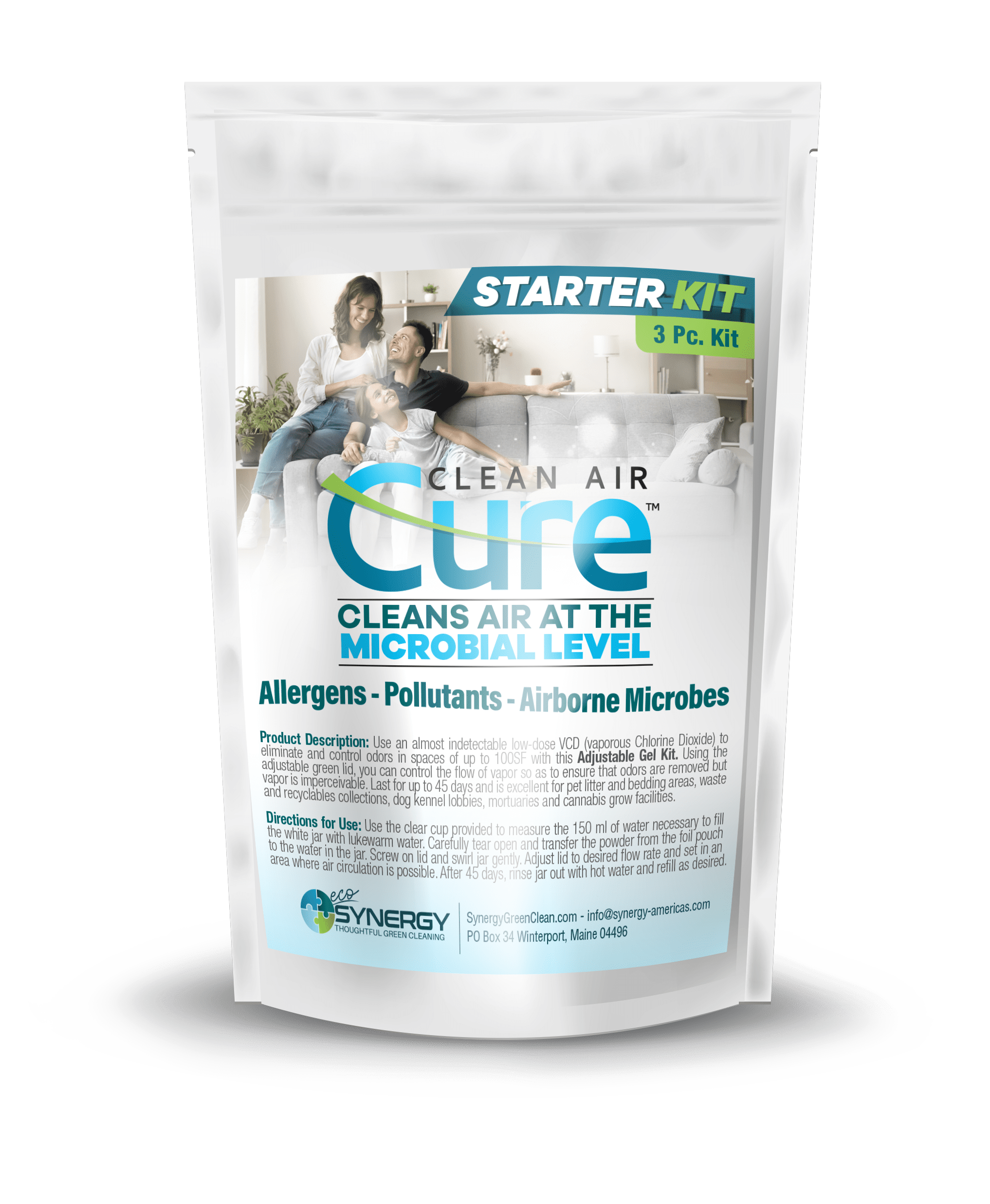
- Use our Clean Air Cure and place strategically in the cabinets and in your pantry.
3. HVAC Systems
- Cold weather reduces airflow and traps contaminants.
- A small ClO₂ unit in the system or vent eliminates microbial buildup.
- Place a CLO2 fresh pack pouch in the ventilation system or near a vent for continued freshness.
Also Read 👉🏻“How do I Use Chlorine Dioxide Tablets to Clean & Sanitize HVAC Systems, Ducts, & Drain Lines”
4. Break Rooms & Small Offices
- Coffee, snacks, and closed windows = stale smells.
- ClO₂ keeps air clean and employees happier.
- Use our Clean Air Cure and Place strategically through out the office or in the breakroom where heavy odors persist.
5. Small Storage Spaces or Closets
- Perfect for lockers, supply closets, and pantries that stay closed for days.
- Use our Clean Air Cure by placing it on a closet shelf or on the closet floor.
Also Read 👉🏻How do I Use CLO₂ Tablets for Cleaning, Odor Removal & Mold?

The Secret to Doing It Once and Being Done
This is the part most people miss. You don’t need to clean more often; you need to clean smarter.
- Deploy ClO₂ in key problem areas
- Let it neutralize odors at the source
- Reduce repetitive scrubbing, spraying, and masking scents
In other words, winter cleaning stops being a chore and becomes a set-it-and-forget-it solution — your air stays fresh, your food lasts longer, and your space feels healthier.
Why This Matters
- Health: Reduces exposure to bacteria, mold, and VOCs that can trigger allergies or respiratory issues.
- Efficiency: Less repetitive cleaning means more time for what matters — family, work, or running your business.
- Economics: Less spoilage, less waste, fewer cleaning supplies.
- Comfort: A fresher environment keeps everyone happy and productive.
Final Thought: The Winter IAQ Shift You Can Make Today
Winter doesn’t have to be a battle against stale air, spoiled produce, or constant cleaning. Understanding the root causes of odors and poor IAQ — and using ClO₂ strategically — completely reframes the problem.
No more fighting the same battle twice. No more masking smells. No more wasted hours.
By investing in a ClO₂ solution for your home or small business, you can finally:
- Neutralize odors at the source
- Reduce microbial contamination
- Extend the freshness of foods
- Save time on winter cleaning
- Maintain a healthier, more pleasant environment for everyone
It’s a simple, smart, and proven way to take winter indoor air quality into your own hands — without endless effort.
Winter may be cold outside, but inside your home or business, freshness is now under your control.

F&Q
1. What causes indoor air quality problems during winter?
During winter, homes and businesses tend to be more sealed, with windows and doors closed to retain heat. This reduces ventilation, allowing dust, mold spores, bacteria, and volatile organic compounds (VOCs) to accumulate in the air. In addition, mud, snow, salt, and debris tracked inside, combined with heating systems that stir up particles, contribute to poor air quality. Without proper mitigation, these conditions lead to lingering odors, faster spoilage of perishable foods, and potential respiratory irritants.
2. Why do refrigerators and enclosed spaces smell worse in winter?
Cold temperatures slow air circulation and trap odors, while moisture from produce, leftovers, and condensation increases bacterial growth. Closed spaces, like fridges, freezers, or storage closets, create microenvironments where odor-causing bacteria and mold thrive. Even frequent cleaning often doesn’t fully remove these airborne contaminants, which is why odors tend to persist.
3. How does chlorine dioxide (ClO₂) improve winter indoor air quality?
ClO₂ is a low-dose oxidizing agent that neutralizes airborne bacteria, mold spores, and VOCs without masking them with fragrances. Unlike traditional cleaners or air fresheners, ClO₂ targets the root cause of odors and microbial contamination. It works continuously, creating a safer, fresher indoor environment while reducing repetitive cleaning tasks.
4. Is ClO₂ safe to use around food and pets?
Yes. When used according to manufacturer instructions, ClO₂ emits ultra-low doses specifically formulated for enclosed spaces, including refrigerators, kitchens, and break rooms. It’s residue-free, fragrance-free, and safe for food storage areas. Many homeowners and small businesses use it to protect perishables without concern for contamination or harsh chemical exposure.
5. How long does a single ClO₂ unit last in a refrigerator or small space?
Most ClO₂ deodorizing kits, like the Fresh Pack™, provide continuous odor control for up to 60 days. The controlled-release system gradually emits ClO₂ vapor, neutralizing odors and reducing microbial load over time. This means you don’t need to constantly check, refill, or manually scrub — one installation lasts for weeks.
6. Can ClO₂ help extend the shelf life of food?
Yes. Odor-causing bacteria and mold spores often contribute to premature spoilage of sensitive foods like berries, leafy greens, herbs, vegetables, and dairy. By reducing these microorganisms in the air and on surfaces, ClO₂ supports longer freshness and reduces waste, helping homeowners and small businesses save money and maintain healthier food.
7. Will ClO₂ replace my regular cleaning routine?
Not entirely. ClO₂ complements cleaning, rather than replacing it. Surface cleaning is still necessary to remove visible dirt, spills, and debris. However, ClO₂ reduces the frequency and intensity of cleaning needed to maintain freshness and odor control, saving time and preventing the frustration of “cleaning the same space twice.”
8. Can ClO₂ be used in small offices or business break rooms?
Absolutely. Enclosed areas such as break rooms, pantries, and storage rooms often suffer from lingering odors caused by food, moisture, and poor ventilation. ClO₂ units neutralize odors without masking scents, creating a fresher, healthier environment for employees and customers, while requiring minimal maintenance.
9. How do I install a ClO₂ deodorizing system in my home or small business?
Most systems are simple to install. For example, the Fresh Pack™ includes a mountable cabinet and pre-measured granule pouches. Simply mount the cabinet in a refrigerator, small pantry, or enclosed space, insert the pouch, and let the controlled-release system do its work. No power source or complex setup is required.
10. Why should I invest in ClO₂ solutions instead of relying on air fresheners or fragrances?
Air fresheners and scented sprays only mask odors — they do not remove the root cause: bacteria, mold, or VOCs. ClO₂ works at the source, neutralizing contaminants and maintaining continuous freshness. This leads to long-lasting odor control, healthier air, and extended food shelf life, making it a smarter investment for both homeowners and small businesses.
Also Read 👉🏻Winter IAQ Solutions: Stop Wood Smoke, Dry Air & Stale Indoor Odors