
The Cooler Was Clean When You Put It Away… So What Happened?
You spent the afternoon last fall doing everything right.
The cooler was emptied, rinsed out, wiped down, and left open in the driveway to dry before you finally packed it away for the winter. The camping gear went into storage bins, the RV got covered, and another season of outdoor adventures came to an end.
Fast forward to spring.
The weather finally breaks, you start getting excited for that first camping trip of the year, and you pull the cooler back out of storage expecting it to be ready to go.
Then you open the lid.
Instead of fresh, clean air… you’re hit with that unmistakable sour, stale, musty smell. Maybe there are dark spots forming in the corners. Maybe the seals feel damp. Suddenly the cooler you cleaned so carefully months ago looks and smells like it sat forgotten in a swamp all winter.
And that’s the frustrating part.
Most campers, hikers, backpackers, and outdoor enthusiasts did clean their gear before putting it away. But odor and mold problems usually don’t happen overnight. They develop slowly inside enclosed spaces where trapped moisture, limited airflow, and microscopic organic buildup create the perfect environment for microbial growth.
By the time you smell it in spring, the process has already been happening for months.
And once it starts, surface cleaning alone usually isn’t enough to fully stop it.
Why This Problem Gets Worse in Spring and Summer
As temperatures rise and humidity increases, enclosed environments become even more active odor zones.
Spring and early summer create:
- Higher moisture levels
- Faster microbial activity
- More condensation in sealed spaces
- Stronger odor compound release
This is why people suddenly notice odor problems in:
- Coolers
- Storage bins
- RVs
- Boats
- Seasonal equipment
- Closets and garages
👉 The problem may have started months ago—it just becomes noticeable now.

Why Enclosed Spaces Become Odor Traps
Enclosed spaces are ideal environments for odor buildup because they combine:
✔ Limited airflow
✔ Trapped humidity
✔ Temperature fluctuation
✔ Porous materials
✔ Residual organic contamination
Even small amounts of moisture can create a chain reaction over time.
Also Read 📖Why Musty Odors Come Back Every Spring?
Common Misconceptions About Odor Problems
Let’s clear up a few common myths:
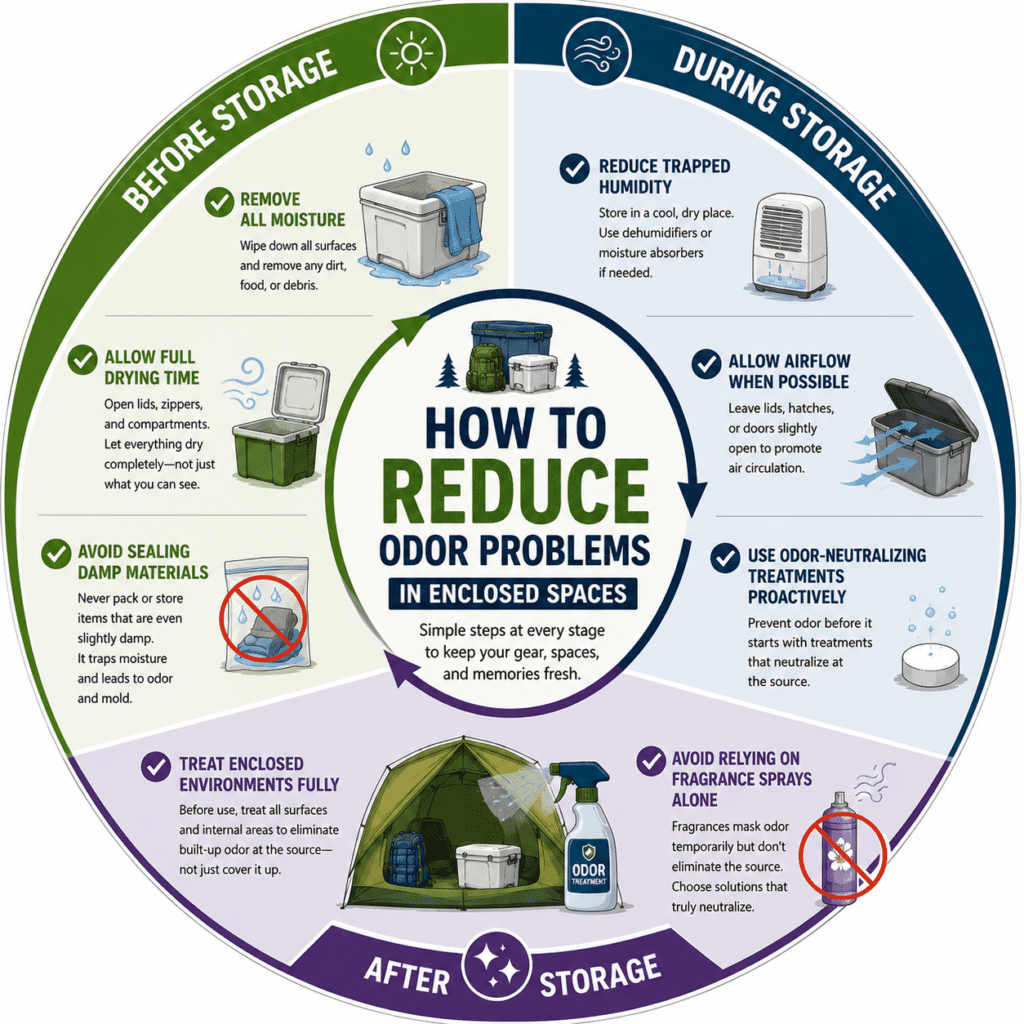
❌ “If I dry it out, the smell will disappear”
→ Odor compounds can remain deep inside materials
❌ “Bleach fixes mold smell”
→ Bleach may clean surfaces but doesn’t always neutralize embedded odor
❌ “Air fresheners solve the problem”
→ They only mask odor temporarily
❌ “If I can’t see mold, there’s no issue”
→ Odor-causing buildup often exists before visible growth appears
Why Surface Cleaning Often Fails
This is where many people get frustrated.
They clean the surface…
…and the smell still comes back.
Why?
Because:
- Odor compounds remain trapped inside materials
- Enclosed airspaces retain contamination
- Sprays don’t penetrate deeply enough
👉 If the source remains active, the odor cycle continues.
Why Chlorine Dioxide Technology Works Differently
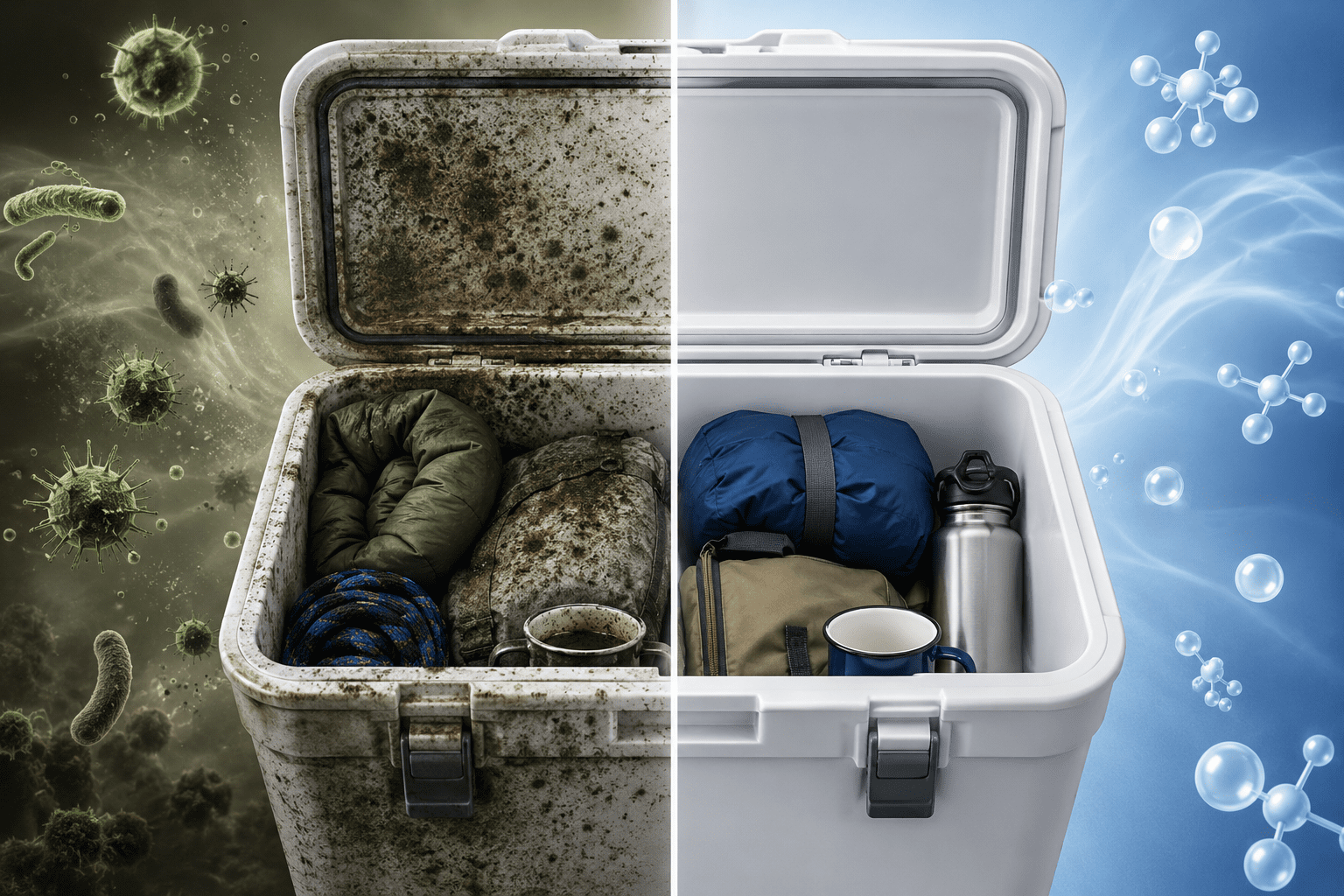
Chlorine dioxide technology works through true odor neutralization, not masking.
It:
- Breaks down odor-causing compounds
- Penetrates enclosed environments
- Reaches into porous materials
- Neutralizes odors at the molecular level
Because chlorine dioxide can exist in a gas phase, it can travel into:
- Fabric fibers
- Foam materials
- Hard-to-reach crevices
- Sealed storage areas
👉 This creates a more complete odor treatment process.
👉https://freshtent.com/how-to-clean-a-moldy-cooler/
Real-World Example
A cooler put away after summer may seem “mostly dry.”
But inside:
- Small moisture pockets remain
- Organic residue stays trapped
- Enclosed conditions continue developing odor
Months later, opening the lid releases the unmistakable smell of microbial buildup.
For a practical step-by-step example of how this happens in camping coolers specifically, see:
👉 How to clean a moldy cooler before your first trip
Why This Matters More Than Ever
People are becoming more aware of:
- Indoor air quality
- Environmental odor issues
- Hidden contamination sources
- Long-term storage conditions
As awareness grows, odor treatment is shifting away from masking and toward:
👉 Source-level neutralization
Conclusion
Odor problems in enclosed spaces don’t happen by accident.
They develop through a predictable combination of moisture, microbial activity, and trapped air.
And once odor compounds form, masking them isn’t enough.
👉 Real odor control starts by neutralizing the source.
❓ FAQs (10)
1. Why do enclosed spaces smell musty?
Because trapped moisture and microbial activity create odor compounds over time.
2. Why do coolers smell after storage?
Residual moisture and organic buildup continue developing odor in enclosed conditions.
3. What causes odor compounds?
Bacteria, mildew, and organic breakdown release VOCs into the air.
4. Why doesn’t surface cleaning remove odor?
Because odor compounds remain embedded inside materials and enclosed airspaces.
5. Can odor exist without visible mold?
Yes, odor-causing microbial activity often starts before visible growth appears.
6. Why does humidity make odors worse?
Humidity accelerates microbial activity and VOC release.
7. Do air fresheners eliminate odor?
No, they only mask odor temporarily.
8. Why are storage bins high-risk for odor?
They trap moisture and limit airflow.
9. How does chlorine dioxide neutralize odor?
It breaks down odor-causing compounds at the molecular level.
10. How do you prevent enclosed-space odor problems?
Control moisture, improve drying, and neutralize odor sources before storage.