

Why Odors Get Worse During Humid Weather
Every summer, facility managers, maintenance teams, transportation authorities, hospitality operators, marina owners, and commercial cleaning professionals notice a familiar trend: odor complaints increase.
Spaces that seemed manageable during cooler months suddenly develop persistent musty smells, stale air, mildew odors, or organic odors that become difficult to eliminate.
While heat often gets the blame, humidity is frequently the hidden factor.
When humidity levels rise, moisture accumulates in porous materials, ventilation systems, flooring, fabrics, insulation, and hard-to-reach spaces. This added moisture creates ideal conditions for microbial activity while simultaneously intensifying many odor-producing compounds.
The result is an environment where odors develop faster, linger longer, and become more noticeable to occupants.
The Science Behind Humidity and Odor Formation
Humidity affects odors in several ways simultaneously.
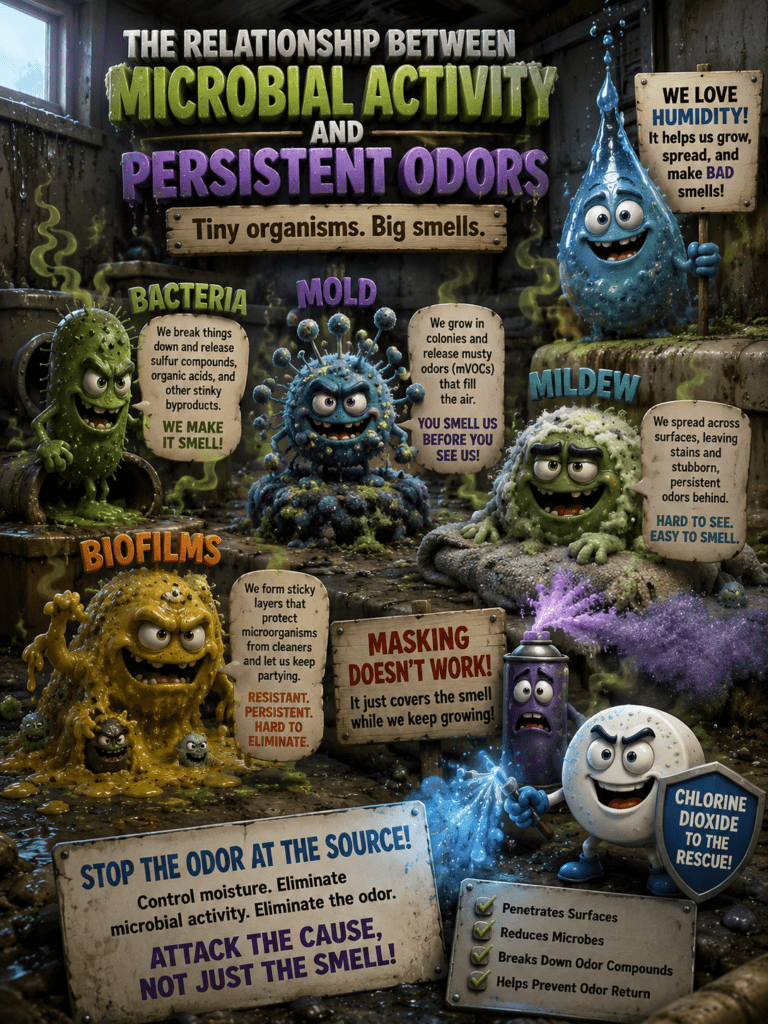
First, moisture supports the growth of bacteria, mold, mildew, and fungi. These microorganisms feed on organic matter commonly found in facilities, transportation systems, and occupied environments.
As these organisms grow, they release metabolic byproducts known as microbial volatile organic compounds (mVOCs). Many of these compounds produce the musty, sour, earthy, or stale odors commonly associated with damp environments.
Second, humidity can increase the volatility of existing odor molecules, making them easier for occupants to detect.
Finally, moisture can become trapped inside porous materials, allowing odor-producing organisms to survive and multiply beyond the reach of routine cleaning practices.
This combination creates a cycle where odors continually return despite repeated cleaning efforts
Also Read 📖The Hidden Science of Mold and Odor Growth in Enclosed Spaces
Industrial Facilities: Continuous Operations Create Continuous Challenges

Industrial environments often experience elevated humidity due to manufacturing processes, equipment operation, steam generation, washdown procedures, and limited ventilation.
Common examples include:
- Manufacturing facilities
- Food processing plants
- Warehouses
- Distribution centers
- Waste handling operations
- Equipment maintenance facilities
In these settings, odors may originate from organic residues, standing water, drains, production materials, or microbial growth within equipment and ventilation systems.
The challenge is compounded by continuous operation schedules that leave little opportunity for extensive shutdowns or remediation projects.
When humidity remains consistently high, odor-producing microorganisms can establish themselves throughout the facility, creating recurring complaints from employees and visitors alike.
Public Transportation Systems: High Occupancy Meets High Humidity

Few environments experience the combination of moisture, occupancy, and limited ventilation found in public transportation systems.
Examples include:
- City buses
- Subway cars
- Rail systems
- Airport shuttles
- Transit stations
- Passenger terminals
Thousands of passengers introduce moisture daily through breathing, perspiration, wet clothing, umbrellas, and outdoor contaminants.
During summer months, elevated humidity levels combine with HVAC condensation and constant occupancy to create ideal conditions for microbial growth.
Because these spaces are continually occupied, odor issues can quickly affect passenger perception and overall customer experience.
Also Read 📖How Do I Get Rid of Food Odors in My Car Fast?
Marine Environments: Constant Exposure to Moisture

Marine facilities face some of the most persistent humidity-related odor challenges.
Examples include:
- Boats
- Ferries
- Marinas
- Yacht clubs
- Harbor facilities
- Cruise vessels
Salt air, condensation, fluctuating temperatures, and limited airflow create conditions that encourage mold, mildew, and bacterial growth.
Common marine odors often originate from:
- Bilges
- Storage compartments
- Upholstery
- HVAC systems
- Engine spaces
- Moisture-damaged materials
Without effective odor management, these odors can become deeply embedded within the vessel and surrounding infrastructure.
Also Read 📖Why Musty Odors Come Back Every Spring?
Hotels and Hospitality Facilities: Guest Perception Matters
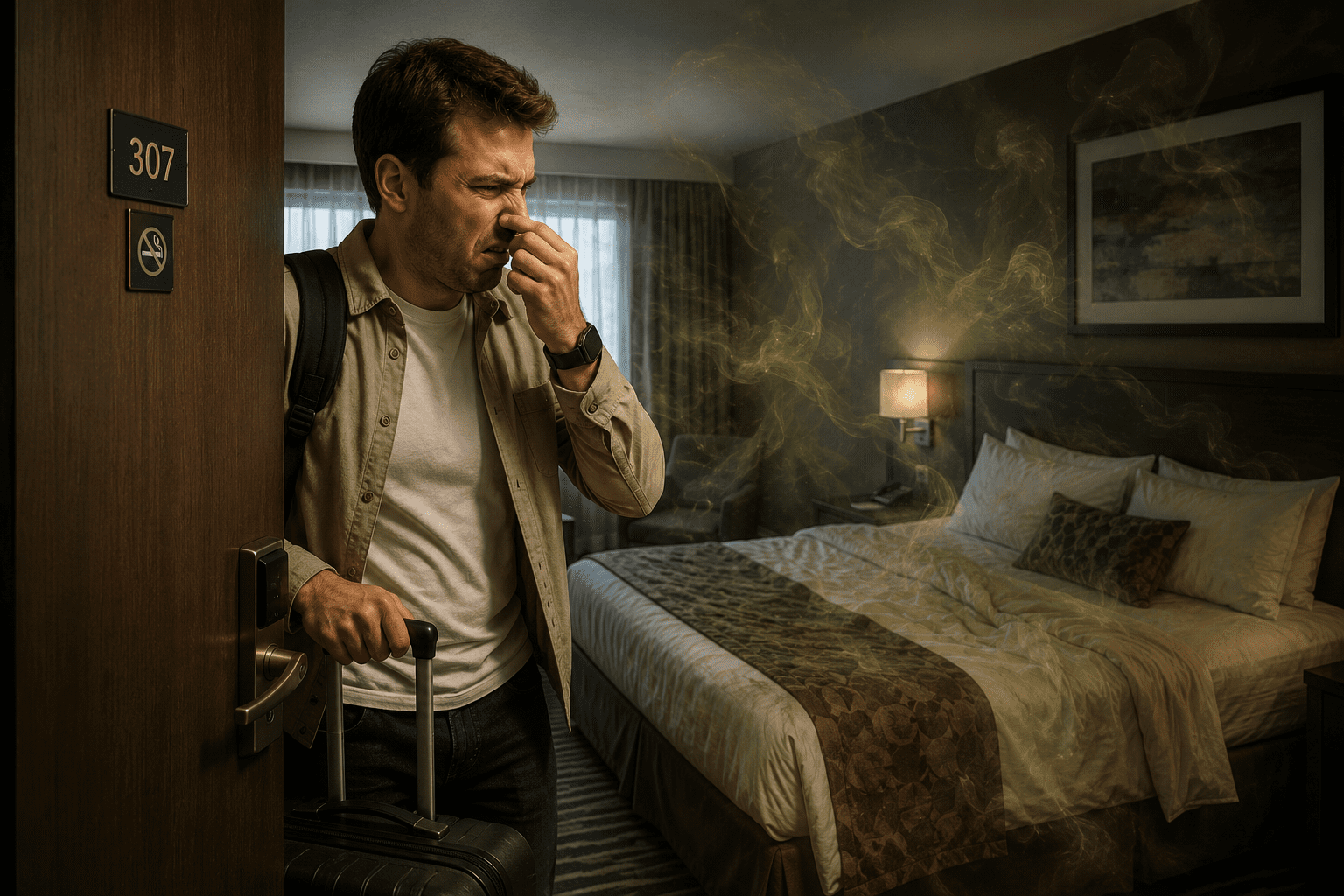
In hospitality environments, odor complaints can directly impact guest satisfaction and online reviews.
Hotels face unique humidity-related challenges due to:
- High occupancy rates
- Frequent guest turnover
- Bathroom moisture
- HVAC condensation
- Laundry operations
- Seasonal weather conditions
Areas most vulnerable to odor development include guest rooms, hallways, fitness centers, laundry facilities, conference rooms, and storage areas.
Even minor odor issues can create negative impressions that influence guest experiences long before other service factors are evaluated.
Also Read 📖Hotel Room Air Quality: The Silent KPI in Housekeeping
RV Rental Fleets: Seasonal Humidity Meets Frequent Occupancy

RV rental operators often encounter significant odor challenges during peak travel seasons.
Each rental cycle introduces:
- Moisture from occupants
- Cooking odors
- Bathroom humidity
- Wet clothing and equipment
- Limited ventilation between rentals
During summer months, elevated temperatures and humidity can rapidly accelerate microbial activity inside enclosed RV interiors.
If left untreated, odors may become increasingly difficult to eliminate between renters, leading to customer complaints and reduced fleet appeal.
Also Read 📖Why Odors Stay Trapped in Fabric, Foam, and Porous Materials
Fitness Centers, Locker Rooms, and Shower Facilities

Fitness facilities provide ideal conditions for odor formation.
Common contributing factors include:
- Perspiration
- Wet flooring
- Damp towels
- High traffic
- Warm temperatures
- Constant moisture exposure
Locker rooms, shower areas, and fitness studios often experience nearly continuous humidity throughout the day.
These conditions support microbial growth on flooring, walls, drains, equipment surfaces, and ventilation systems.
As a result, odors frequently return shortly after routine cleaning unless the underlying sources are effectively addressed.
👉🏻Chlorine Dioxide for Gyms & Fitness Centers
Summer Camps and Recreational Facilities
Summer camps face a unique combination of challenges:
- High occupancy
- Seasonal reopening
- Shared facilities
- Limited ventilation
- Wet gear and clothing
- Constant activity
Cabins, bathhouses, dining halls, recreation centers, and storage buildings often experience elevated humidity throughout the season.
Because many camp facilities remain closed during portions of the year, reopening can reveal odor issues that developed during storage periods and intensified once humidity levels increased.

How Chlorine Dioxide Works in High-Humidity Environments
Traditional odor-control products often focus on masking unpleasant smells with fragrances. While this may temporarily improve perceived air quality, it frequently leaves the underlying cause untouched.
In high-humidity environments, the source of the odor often remains active beneath the surface.
Chlorine dioxide approaches odor management differently.
Rather than covering odors with fragrance, chlorine dioxide functions as a powerful oxidizing agent that can interact with odor-causing compounds and microorganisms. This oxidation process helps break down many of the compounds responsible for unpleasant smells while targeting microbial populations that contribute to recurring odor formation.
This makes chlorine dioxide particularly useful in environments where:
- Humidity remains elevated for extended periods
- Odors originate from microbial growth
- Airflow is limited
- Moisture accumulates in hidden spaces
- Traditional cleaning methods provide only temporary results
Because chlorine dioxide can move throughout enclosed environments, it can help reach odor sources hidden within porous materials, HVAC systems, storage areas, equipment compartments, and other difficult-to-access locations.
Also Read 📖Camping Gear Storage Tips | Prevent Mold with ClO2 Tablets
The Science Behind How Chlorine Dioxide Prevents Odors
Many odor-control products attempt to hide unpleasant smells by introducing fragrances into the environment. While this may temporarily improve perceived air quality, it typically leaves the underlying odor source untouched.
Chlorine dioxide works differently.
Rather than masking odors, chlorine dioxide is a selective oxidizing molecule that reacts with many of the compounds responsible for foul smells.
Step 1: It Targets Odor Molecules

Many unpleasant odors originate from sulfur-containing compounds, amines, organic acids, and microbial byproducts released by bacteria, mold, and mildew.
These compounds often contain chemical structures that produce strong odors even at very low concentrations.
When chlorine dioxide encounters these compounds, oxidation reactions alter their molecular structure.
Once these compounds are changed chemically, they often lose the characteristics that make them detectable as odors.
Step 2: It Helps Reduce Odor-Producing Microorganisms
Humidity creates ideal conditions for microorganisms to multiply.
As bacteria, mold, mildew, and fungi grow, they continuously generate new odor-producing compounds.
Chlorine dioxide can penetrate areas where microorganisms commonly thrive, including:
- Porous materials
- HVAC systems
- Upholstery
- Drains
- Wall cavities
- Storage compartments
- Hard-to-reach enclosed spaces
By helping reduce microbial populations, chlorine dioxide may interrupt the cycle that continually produces new odors.
Step 3: It Reaches Beyond Surface Cleaning
Many odor problems originate in places that routine cleaning cannot easily reach.
Examples include:
- Beneath flooring
- Behind wall surfaces
- Inside ductwork
- Inside vehicle interiors
- Under equipment
- Inside storage compartments
Because chlorine dioxide functions as a gas when activated, it can move throughout enclosed spaces and contact areas that sprays and wipes may miss.
This broader distribution helps address odor sources that would otherwise remain untouched.
Step 4: It Breaks the Odor Cycle
Humidity-driven odor problems often follow a repeating pattern:
Humidity → Microbial Growth → Odor Production → Occupant Complaints
Traditional fragrance products typically affect only the final step in that cycle.
Chlorine dioxide is used to address the earlier stages by targeting both odor-causing compounds and many of the microorganisms responsible for producing them.
As a result, odor control efforts may become more effective and longer-lasting than approaches that focus solely on masking smells.
Also Read 📖Chlorine Dioxide Safety: Myths vs. Science | Complete Safe-Use Guide

When Summer Humidity Creates the Perfect Storm

Imagine a coastal hotel entering peak tourist season.
Occupancy rates are high. Guest showers generate moisture throughout the day. Laundry facilities run continuously. HVAC systems work harder than normal due to rising outdoor temperatures.
Meanwhile, outdoor humidity remains elevated for weeks at a time.
The result is a perfect environment for microbial activity.
Within a short period, musty odors begin appearing in guest rooms, hallways, storage areas, and fitness facilities. Housekeeping teams clean aggressively, but complaints continue.
The problem isn't necessarily inadequate cleaning.
The issue is that humidity is accelerating microbial activity behind the scenes.
This same scenario plays out every summer in:
- Hotels
- RV fleets
- Marinas
- Summer camps
- Transit systems
- Industrial facilities
- Athletic centers
Organizations that understand the connection between humidity and odor formation are often better positioned to implement long-term odor management strategies.
Why Chlorine Dioxide Performs Well In Humid Environments
Humidity creates ideal conditions for microorganisms to thrive.
As microbial populations grow, they continuously release new odor-producing compounds.
This creates a cycle where odors return shortly after cleaning.
Chlorine dioxide helps break that cycle in two ways:
1. It Targets Existing Odor Molecules
It reacts directly with many compounds already producing unpleasant smells.
2. It Helps Reduce Odor-Producing Microorganisms
By helping reduce bacteria, mold, mildew, and other microorganisms, chlorine dioxide may limit the production of future odor compounds.
This is why chlorine dioxide is often viewed as a source-control technology rather than a fragrance-based solution.
Also read 📖How Can I Kill Mold and Eliminate Musty Odors at Home
Why Gas Distribution Matters

One of the biggest challenges in humid facilities is that odor sources are often hidden.
Examples include:
- HVAC systems
- Wall cavities
- Under flooring
- Upholstery
- Drain systems
- Storage compartments
- Vehicle interiors
- Boat cabins
When activated, chlorine dioxide gas can move throughout enclosed spaces and contact areas that traditional cleaning methods may not easily reach.
This allows treatment to extend beyond visible surfaces.
👉🏻Chlorine Dioxide for Cleaning the Air
Humidity Challenges Are Increasing
Many regions are experiencing longer periods of elevated temperatures and humidity.
At the same time, facilities are becoming more energy efficient and tightly sealed, reducing natural airflow while increasing reliance on HVAC systems.
These trends create new challenges for odor management professionals.
Future facility maintenance programs will likely place greater emphasis on:
- Moisture management
- Indoor air quality
- Microbial control
- HVAC sanitation
- Proactive odor prevention
Organizations that address odor sources before they become visible or widespread can often reduce complaints, improve occupant experiences, and maintain cleaner indoor environments.
Also Read 📖How Chlorine Dioxide Improves HVAC Air Quality and Indoor Environments
What To Understand
Humidity is far more than an environmental comfort issue.
It serves as a catalyst for microbial growth, odor production, and persistent air-quality challenges across a wide range of industries.
From industrial facilities and transportation systems to hotels, RV rentals, fitness centers, marine environments, and summer camps, high-humidity conditions create ideal circumstances for recurring odor problems.
Understanding the relationship between moisture, microbial activity, and odor formation is the first step toward effective odor management.
Rather than simply masking unpleasant smells, chlorine dioxide technologies offer a science-based approach focused on addressing odor sources at their origin.
For facilities operating in environments where humidity never seems to take a break, proactive odor management can play an important role in maintaining cleaner, fresher, and more comfortable spaces.
Also Read 📖How Chlorine Dioxide Neutralizes the Odor Compounds Created by Wet Summer Gear